

What's Happening?
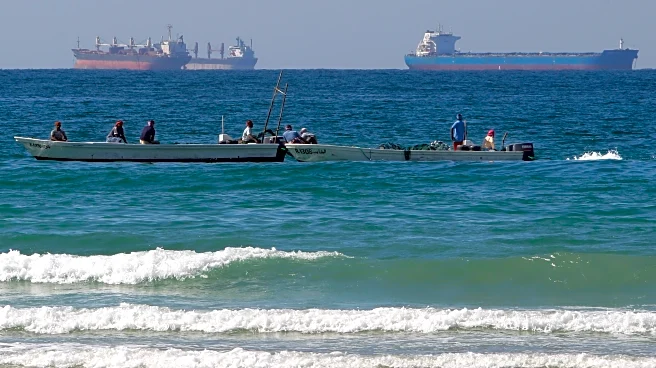
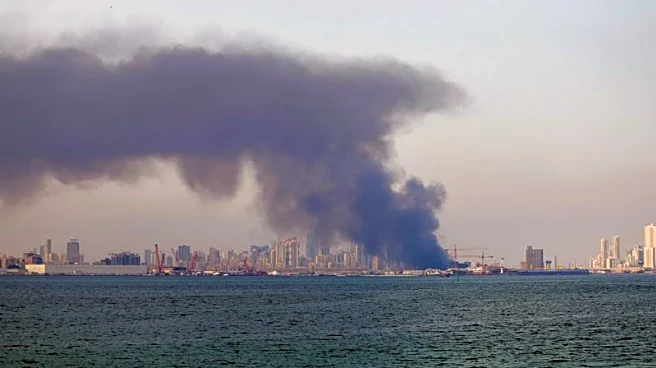
The ongoing conflict involving the U.S., Israel, and Iran has led to significant disruptions in global oil markets, particularly affecting the Strait of Hormuz, a critical chokepoint for oil and liquefied natural gas (LNG) trade. Following the onset of hostilities,
global crude oil prices surged by over 9%, with Brent crude trading in the high $70s. The conflict has resulted in a temporary halt of tanker traffic through the Strait of Hormuz, which handles about 20% of global oil consumption. This has led to concerns about potential long-term disruptions in oil supply. Analysts predict that U.S. gasoline prices could increase by 10-30 cents per gallon, with some areas experiencing even higher spikes. The situation has also affected natural gas markets, with European prices surging over 20%, although U.S. prices remain stable for now.
Why It's Important?
The disruption in oil and LNG trade through the Strait of Hormuz has significant implications for global energy markets and the U.S. economy. A prolonged conflict could lead to sustained high oil prices, impacting consumer costs and potentially slowing economic growth. The U.S., as a major exporter of LNG, might benefit from higher global prices, but domestic electricity costs could rise. The situation underscores the vulnerability of global energy supply chains to geopolitical tensions. Additionally, the conflict could strain U.S. relations with other oil-producing nations and complicate international diplomatic efforts to stabilize the region.
What's Next?
If the conflict continues, oil prices could exceed $100 per barrel, further straining global markets. The U.S. and its allies may need to consider strategic releases from oil reserves to stabilize prices. OPEC+ has announced production increases, but these may be insufficient if the Strait of Hormuz remains closed. The situation could prompt increased investment in alternative energy sources and infrastructure to reduce dependency on Middle Eastern oil. Diplomatic efforts to de-escalate the conflict will be crucial in determining the duration and impact of these disruptions.