





What's Happening?
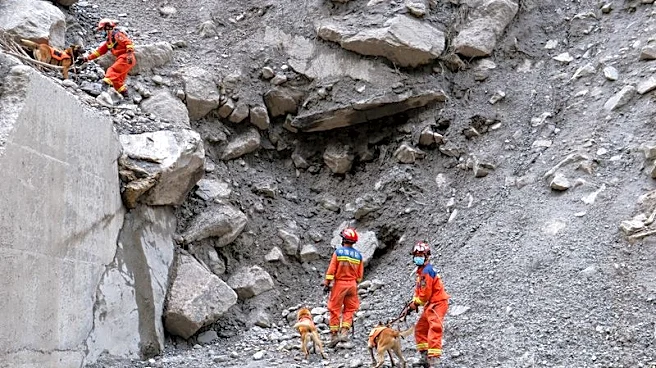
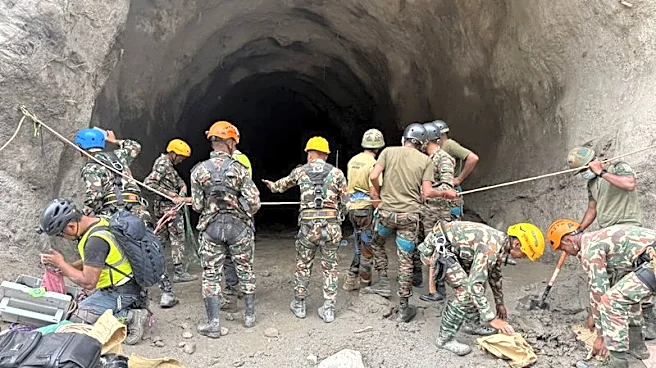
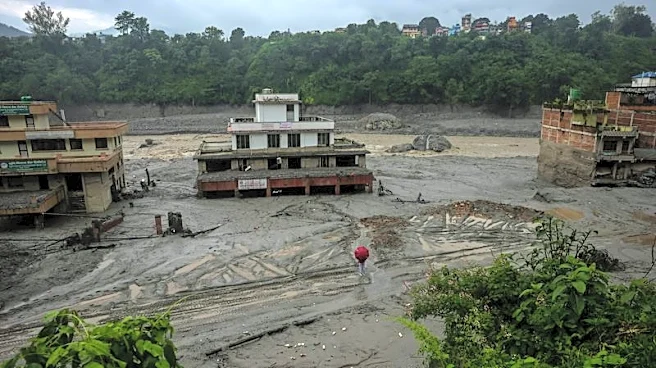
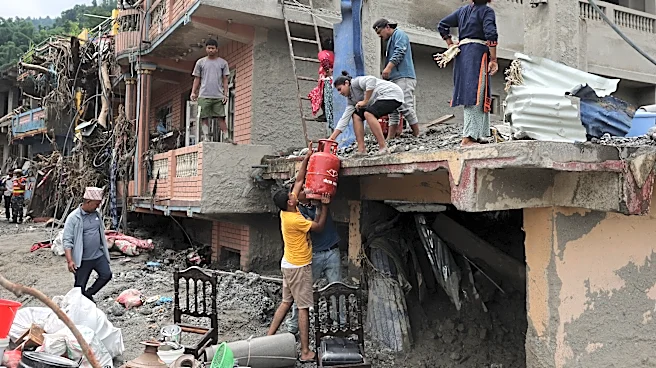
Following a catastrophic flood in Gyirong (Kyirong), Tibet, China has imposed a 'wall of silence,' making it difficult to ascertain the full extent of the disaster and rescue efforts. Four days after the flood, Chinese authorities released a breakdown
of missing nationalities, with 546 people unaccounted for, including 261 foreign nationals, and a death toll of 16 in Tibet. This contrasts with neighboring Nepal, where the death toll has reached 781, and 2,502 people are missing. The disaster occurred in a region known for its extreme geography and political sensitivity, making independent verification challenging. Foreign journalists require special authorization to enter Tibet, which is rarely granted outside government-organized tours. Lhadon Tethong, executive director of the Tibet Action Institute, noted the unusual silence from their extensive network of contacts in the region. Videos of the disaster, which initially spread globally, are now heavily censored within China, with only still frames or edited clips available. Information flow is primarily from authorities to state media, which focuses on rescue progress and the official response, aligning with the narrative that search operations are a priority for Xi Jinping and Li Qiang.
Why It's Important?
The imposition of a 'wall of silence' in Tibet following a natural disaster highlights China's stringent control over information, particularly in politically sensitive regions. This censorship prevents independent assessment of the disaster's impact and the effectiveness of rescue operations, raising concerns about transparency and accountability. For the international community, the lack of verifiable information makes it difficult to offer appropriate aid or understand the true scale of human suffering. The situation also underscores the broader issue of human rights and freedom of the press in Tibet, a region where access is severely restricted. The Chinese government's control over the narrative, even in the face of a humanitarian crisis, reflects its deep-seated concerns about potential unrest or challenges to its authority. This approach can erode trust and fuel skepticism about official reports, particularly given the historical context of the 1959 uprising and subsequent crackdowns. The incident serves as a stark reminder of the challenges faced by those seeking to report on events within China's most heavily monitored regions.
What's Next?
The immediate future will likely see continued efforts by Chinese authorities to control the narrative surrounding the disaster, with state media providing updates that align with the official line. Independent organizations and Tibetan exile groups will likely continue to attempt to gather information, though their efforts will be hampered by communication blackouts and censorship. The international community may issue calls for greater transparency and access for humanitarian aid and independent observers, but these are unlikely to be heeded by Beijing. The incident could further strain relations between China and countries concerned about human rights and press freedom. In the long term, this event reinforces the pattern of information control in Tibet, making it increasingly difficult for the outside world to understand the realities on the ground. It may also lead to increased scrutiny of China's disaster response protocols and its willingness to accept international assistance in sensitive areas.
Beyond the Headlines
The 'wall of silence' in Tibet extends beyond mere disaster management; it reflects a deeper strategy of cultural assimilation and political control. The Chinese government views any independent reporting or unauthorized mobilization in Tibet as a potential separatist threat, stemming from the historical context of the 1959 uprising and subsequent protests. The tightening of surveillance and controls, particularly since the 2008 protests and the self-immolations, indicates a profound insecurity regarding its legitimacy in the region. The recent 'Ethnic Unity and Progress Promotion Law' further formalizes this assimilation process, aiming to integrate ethnic minorities into a national identity defined by the Communist Party. This approach, as critics argue, prioritizes political stability and ideological conformity over transparency and human rights, even in times of crisis. The tragedy in the Himalayas, therefore, becomes a microcosm of the broader struggle for self-determination and cultural preservation in Tibet, highlighting the ethical and moral dilemmas faced by the international community in engaging with a state that prioritizes control over open information.