






What's Happening?
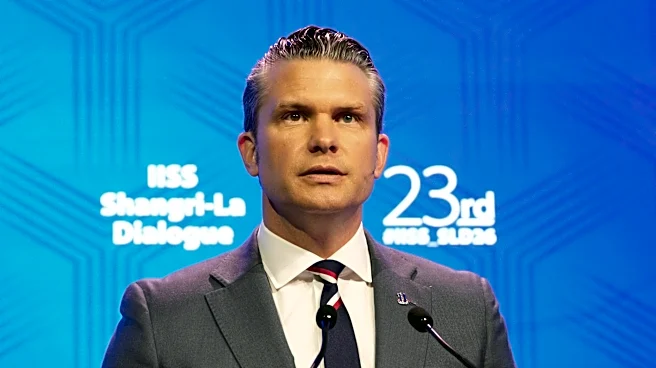
Defense Secretary Pete Hegseth's tenure at the Pentagon has been marked by a pervasive atmosphere of distrust and suspicion, according to multiple sources. Hegseth has reportedly fired over two dozen senior military officers and clashed with civilian
service chiefs, creating a culture of fear and infighting. His actions have included blocking promotions and requiring nondisclosure agreements and polygraph tests for certain operations. The environment has led to a situation where Pentagon officials are constantly concerned about their job security, with decisions being made based on whether they would keep Hegseth employed. This culture of secrecy and suspicion has affected military planning and decision-making, particularly in the context of the U.S. military's strategic operations.
Why It's Important?
The leadership style of Defense Secretary Hegseth has significant implications for U.S. national security and military effectiveness. The distrust and infighting within the Pentagon could undermine the ability of the U.S. military to respond effectively to international threats and challenges. The firing of senior officers and the creation of a culture of fear may lead to a lack of continuity and stability in military leadership, potentially affecting morale and operational readiness. Furthermore, the secrecy and suspicion surrounding decision-making processes could hinder strategic planning and the implementation of defense policies, impacting the U.S.'s ability to maintain its global military presence and influence.
What's Next?
The ongoing tensions and leadership changes at the Pentagon may prompt further scrutiny from lawmakers and military officials. There could be calls for investigations into Hegseth's leadership practices and their impact on military operations. Additionally, the situation may lead to increased pressure on the administration to address the issues of distrust and infighting within the Department of Defense. The potential for further leadership changes and the need for a more transparent and cohesive decision-making process could shape the future direction of U.S. defense policy and strategy.
Beyond the Headlines
The situation at the Pentagon under Hegseth's leadership raises broader questions about the role of political influence in military affairs. The reported culture of fear and secrecy may reflect a larger trend of politicization within the Department of Defense, which could have long-term implications for civil-military relations in the U.S. The emphasis on loyalty and the suppression of dissenting voices may also impact the ability of military leaders to provide candid and unbiased advice to civilian leadership, potentially affecting the integrity of military decision-making processes.