




What's Happening?
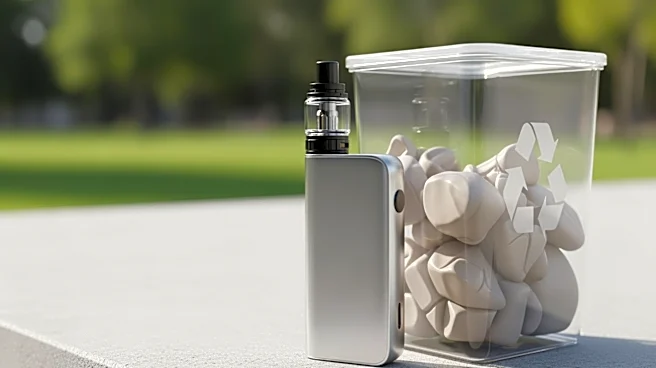
Marathon County, Wisconsin, has initiated a free disposal program for nicotine vapes throughout April, as part of Vape Disposal Month. This effort is a collaboration between the Nicotine Prevention Alliance of Central Wisconsin, the Marathon County Alcohol
& Other Drug Partnership, Good News Project, the Marathon County Health Department, and the Marathon County Solid Waste Department. The initiative addresses the environmental and safety risks posed by disposable vapes, which contain lithium-ion batteries and e-liquid. These components can contaminate soil and water or cause fires if improperly discarded. According to a report by the U.S. Public Interest Research Group Education Fund, nearly 500,000 disposable vapes are discarded daily, contributing to electronic waste and fire hazards in waste facilities. Residents can dispose of their vapes at designated locations in Wausau and Ringle.
Why It's Important?
The initiative is crucial in mitigating the environmental and safety risks associated with the improper disposal of nicotine vapes. Lithium-ion batteries in these devices can ignite fires, posing significant hazards in waste management facilities. By providing a safe disposal option, Marathon County aims to reduce the incidence of such fires and prevent soil and water contamination. This program also highlights the growing issue of electronic waste, as newer vape devices with additional features contribute to the problem. The initiative serves as a model for other regions facing similar challenges, emphasizing the need for community-based solutions to manage electronic waste effectively.
What's Next?
As the program continues throughout April, it is expected to raise awareness about the environmental impact of vape disposal and encourage responsible behavior among residents. The success of this initiative could lead to its extension or adaptation in other counties facing similar issues. Stakeholders, including environmental agencies and local governments, may consider implementing similar programs to address electronic waste challenges. Additionally, the initiative could prompt discussions on broader regulatory measures for the disposal of electronic devices, potentially influencing policy changes at the state or national level.