





What's Happening?
A team of researchers, including Dai, Jin Geng, and Dianpeng Qi, have developed a new type of 'living plastic' that can self-destruct on command, potentially addressing the environmental issues associated with plastic waste. This innovative material incorporates
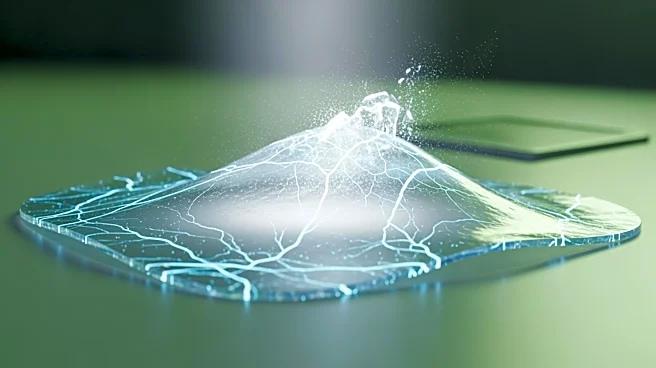
engineered Bacillus subtilis bacteria, which produce two cooperative enzymes capable of breaking down the plastic into its monomer building blocks. The first enzyme acts as a random chopper, cutting the polymer chains into smaller pieces, while the second enzyme further degrades these pieces. The living plastic is made by mixing the dormant spores of B. subtilis with polycaprolactone, a polymer used in 3D printing and surgical sutures. When exposed to a nutrient broth at 122 degrees Fahrenheit, the spores activate and degrade the plastic within six days, without creating microplastic particles.
Why It's Important?
This development is significant as it offers a potential solution to the growing problem of plastic pollution, which poses a major threat to ecosystems and human health. Traditional plastics are durable and take hundreds of years to decompose, leading to accumulation in landfills and oceans. The ability of this new material to self-destruct efficiently could reduce the environmental footprint of plastics, particularly in industries like packaging and medical devices. By preventing the formation of microplastics, this technology also addresses a critical issue in pollution management, as microplastics are known to infiltrate food chains and water supplies, causing harm to wildlife and potentially humans.
What's Next?
The next steps for this technology involve scaling up production and testing the material in real-world applications. Researchers will likely focus on optimizing the efficiency and cost-effectiveness of the living plastic to make it viable for commercial use. Regulatory approval and industry partnerships will be crucial for its adoption. Additionally, further research may explore the use of similar microbial technologies to develop other biodegradable materials, expanding the potential impact of this innovation on reducing plastic waste globally.