



What's Happening?
NASA and Blue Origin are gearing up for significant lunar missions in 2026, marking a pivotal year for space exploration. NASA plans to send astronauts to the moon for the first time in over 50 years, with a mission led by commander Reid Wiseman. This
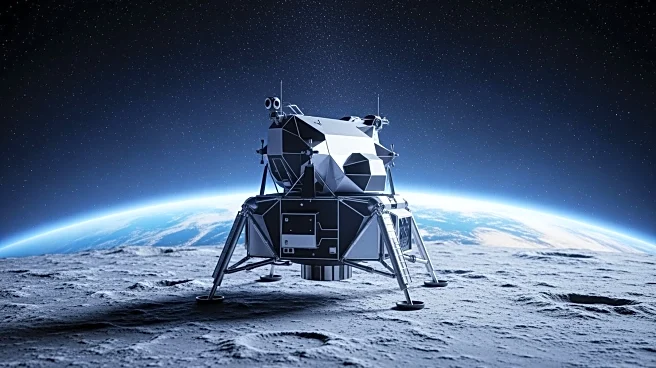
mission will involve a flyby of the moon, providing new observations of the lunar far side, which could aid in selecting future landing sites. Concurrently, Blue Origin, founded by Jeff Bezos, is set to launch a prototype of its Blue Moon lunar lander, designed for NASA's astronauts. This prototype will be taller than the Apollo landers and is part of a broader effort to establish a sustainable human presence on the moon. Additionally, other private companies like Astrobotic Technology and Intuitive Machines are planning robotic moon landings, while China aims to explore the moon's south polar region with a rover and a hopper.
Why It's Important?
These missions represent a significant step forward in lunar exploration and the broader goal of establishing a human presence on the moon. For NASA, the upcoming missions are part of the Artemis program, which aims to return humans to the moon and eventually pave the way for human exploration of Mars. The involvement of private companies like Blue Origin highlights the growing role of commercial entities in space exploration, potentially reducing costs and accelerating technological advancements. These missions could lead to new scientific discoveries, particularly in understanding the moon's geology and potential resources, such as water ice, which is crucial for sustaining long-term human habitation. The collaboration between NASA and private companies also underscores a shift towards a more integrated approach to space exploration, combining public and private sector strengths.
What's Next?
Following the initial flyby mission, NASA plans to conduct further missions that will include moonwalks and the establishment of a lunar base. Blue Origin's prototype launch is a precursor to deploying a crewed version of the Blue Moon lander, which will be nearly double the height of the prototype. These efforts are part of a broader strategy to create a sustainable human presence on the moon, which could serve as a stepping stone for future missions to Mars. The success of these missions could also influence international space policy and foster new partnerships between countries and private companies in space exploration.