





What's Happening?
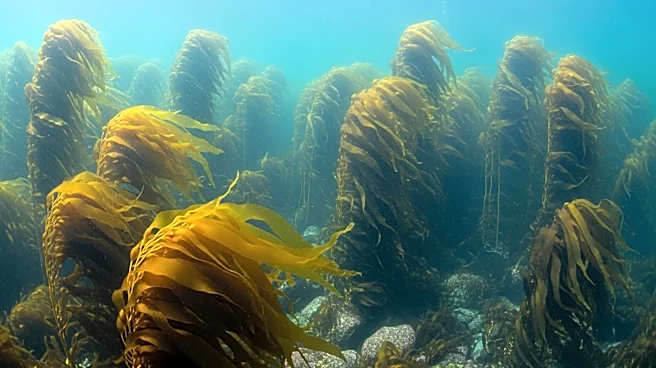
CBS LA Climatologist Marina Jurica reports on efforts to preserve kelp forests, which are crucial natural climate buffers. The report highlights the work being done from the marine lab at San Diego State University to the waters off Palos Verdes. Scientists
emphasize the importance of kelp forests in mitigating climate change effects due to their ability to absorb carbon dioxide and provide habitat for marine life. These underwater ecosystems are facing threats from pollution, rising ocean temperatures, and other environmental stressors, prompting urgent conservation efforts.
Why It's Important?
Kelp forests play a significant role in combating climate change by absorbing large amounts of carbon dioxide, thus reducing greenhouse gases in the atmosphere. Their preservation is crucial for maintaining biodiversity and supporting marine ecosystems. The decline of these forests could lead to increased carbon levels and loss of marine habitats, affecting fisheries and coastal communities economically and ecologically. The efforts to save kelp forests highlight the broader need for environmental conservation and sustainable practices to address climate change.
What's Next?
Conservationists and scientists are likely to continue their research and restoration projects to protect and restore kelp forests. This may involve developing new techniques for planting and nurturing kelp, as well as policies to reduce pollution and manage ocean temperatures. Collaboration between government agencies, environmental organizations, and local communities will be essential to ensure the success of these initiatives. Public awareness campaigns may also be launched to educate people about the importance of kelp forests and how they can contribute to conservation efforts.