


What's Happening?
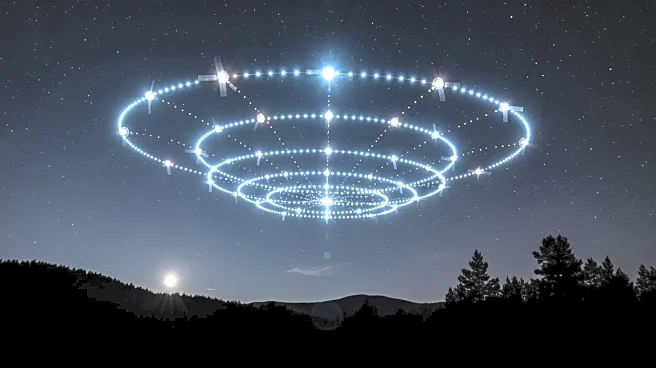
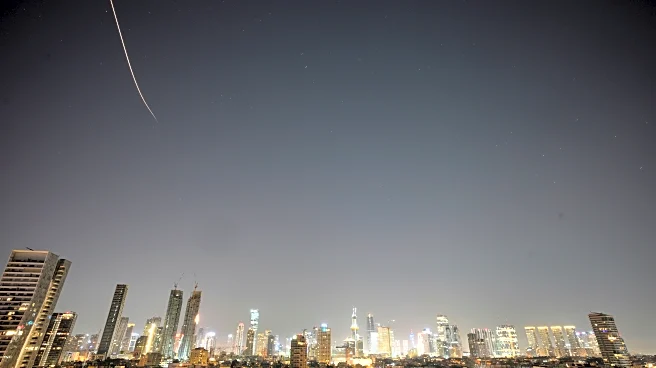
SpaceX has reached a significant milestone by launching its 10,000th satellite into low-Earth orbit. This achievement highlights the rapid expansion of satellite networks, primarily aimed at providing internet access to remote areas. Photographer Joshua
Rozells captured the impact of this proliferation on the night sky through a composite image titled 'Swamped Skies,' which shows numerous satellite streaks. Rozells' work underscores the growing issue of satellite light pollution, which affects both astrophotography and astronomical research. The image, composed of 343 photos, was taken in Western Australia and emphasizes the visual impact of satellites on the night sky.
Why It's Important?
The launch of SpaceX's 10,000th satellite underscores the increasing presence of artificial objects in Earth's orbit, raising concerns about light pollution and its effects on scientific research. Satellite light pollution complicates astronomical observations, making telescope data less reliable and research more time-consuming. While the satellites provide essential internet services to remote areas, the lack of regulation in satellite launches poses challenges for maintaining the integrity of the night sky. This development highlights the need for balancing technological advancements with environmental considerations.
What's Next?
As satellite networks continue to expand, there is a growing call for regulatory measures to address the environmental impact of light pollution. Stakeholders, including astronomers and environmentalists, may advocate for stricter guidelines on satellite launches to mitigate their effects on the night sky. The conversation around satellite light pollution is likely to intensify, prompting discussions on sustainable practices in space exploration and technology deployment.
Beyond the Headlines
The issue of satellite light pollution extends beyond immediate visual impacts, touching on broader themes of environmental stewardship and technological responsibility. The rapid increase in satellite launches reflects a trend towards global connectivity, yet it also challenges humanity to consider the long-term implications of space activities. As the night sky becomes increasingly crowded, the cultural and scientific value of an unpolluted sky may drive efforts to find innovative solutions that balance progress with preservation.