






What's Happening?
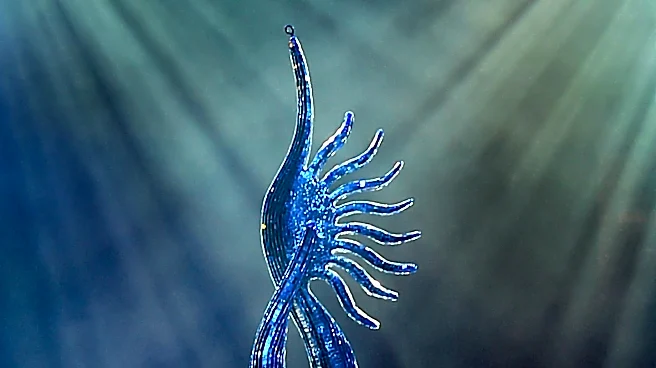
Susan and David Rockefeller, Jr. were recognized at the annual Asia Game Changer Awards for their significant contributions to cultural exchange, environmental stewardship, and philanthropy. The award was presented by actor and activist Sam Waterston,
who highlighted their commitment to patient, rigorous, joyful, and efficacious philanthropy that prioritizes listening. As trustees of the Asian Cultural Council, the Rockefellers have actively fostered connections between artists and cultural communities across Asia and the United States, engaging with numerous cultural leaders in the region. Susan Rockefeller emphasized their guiding principles of family, art, and nature, defining 'family' as the global community and 'art' as a means to cultivate empathy. She also underscored the importance of maintaining a healthy environment, including healthy soils and seas, to achieve a shared future that maximizes human potential. Their dedication to environmental conservation extends throughout the Asia-Pacific, notably through Susan's establishment of the Sapphire Project in Australia, which aims to mobilize philanthropic support for ocean protection. David Rockefeller, Jr. spoke of his uncle, John D. Rockefeller 3rd, who founded Asia Society in 1956, as a personal hero whose travels in Asia profoundly influenced his own life. He stressed the enduring importance of human contact and global connections.
Why It's Important?
The recognition of Susan and David Rockefeller, Jr. at the Asia Game Changer Awards underscores the critical role of philanthropy in fostering international cultural understanding and addressing global environmental challenges. Their work, particularly through the Asian Cultural Council, directly impacts U.S. soft power and diplomatic relations by building bridges between American and Asian artistic and cultural communities. This promotes mutual respect and collaboration, which are vital for navigating complex geopolitical landscapes. Furthermore, Susan Rockefeller's Sapphire Project highlights the growing awareness and investment from U.S. philanthropic entities in international environmental conservation, particularly in the Asia-Pacific region. This initiative contributes to global efforts to combat climate change and protect marine ecosystems, issues that have direct implications for U.S. economic stability, resource security, and public health. Their emphasis on 'global family' and 'empathy through art' reflects a broader trend in U.S. philanthropy towards holistic approaches that integrate cultural, social, and environmental objectives, influencing how future philanthropic endeavors might be structured and prioritized.
What's Next?
The continued work of Susan and David Rockefeller, Jr. through the Asian Cultural Council and the Sapphire Project is expected to further strengthen cultural ties and environmental initiatives between the U.S. and Asia. Their ongoing engagement with cultural leaders and their focus on ocean protection in the Asia-Pacific region suggest a sustained commitment to these areas. This recognition may also inspire other philanthropic organizations and individuals to invest in similar cross-cultural and environmental endeavors, potentially leading to increased funding and collaborative projects. The emphasis on 'human contact' and 'global family' could influence future strategies for international engagement, promoting more people-to-people exchanges and collaborative solutions to shared global problems. The Sapphire Project's efforts to mobilize philanthropic support for ocean protection could serve as a model for other regions, potentially expanding its reach or inspiring similar initiatives elsewhere. Their advocacy for a healthy environment and cultural understanding will likely continue to shape discussions around sustainable development and international cooperation.
Beyond the Headlines
The recognition of Susan and David Rockefeller, Jr. extends beyond a simple award, highlighting the enduring legacy of the Rockefeller family in shaping U.S. philanthropy and international relations. Their work embodies a long-standing tradition of private citizens playing a significant role in global diplomacy and cultural exchange, often complementing or even pioneering efforts where governmental action might be limited. The emphasis on art as a tool for empathy and cultural understanding speaks to a deeper belief in the power of non-political avenues to bridge divides and foster common ground, which is particularly relevant in an increasingly polarized world. Furthermore, their commitment to environmental stewardship, particularly ocean conservation, reflects a growing understanding that ecological health is intrinsically linked to global stability and human well-being. This approach challenges traditional philanthropic models by integrating diverse fields—culture, environment, and social impact—into a cohesive strategy for global betterment, suggesting a shift towards more interconnected and holistic philanthropic frameworks.