




What's Happening?
Massachusetts is currently experiencing severe weather conditions, prompting a flash flood warning and a flood watch across several counties. A flash flood warning is in effect for southwestern Bristol County and south central Plymouth County until 2
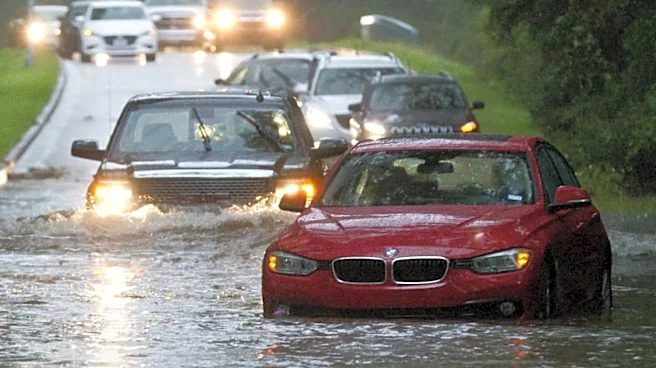
p.m. The National Weather Service (NWS) has cautioned residents about potential flash flooding in small creeks and streams, urban areas, highways, streets, and underpasses, as well as other low-lying areas with poor drainage. Additionally, a broader flood watch has been issued for Bristol, Plymouth, Barnstable, Dukes, Nantucket, Worcester, Norfolk, and Suffolk counties, which will remain in effect through 6 p.m. Sunday. Steady to heavy rain is infiltrating Southern New England, with meteorologists indicating that the worst conditions are south of the Massachusetts/New Hampshire border. Localized narrow bands of torrential rainfall are possible, with widespread rainfall amounts of 0.50 to 2 inches expected, and some areas potentially receiving 2-4 inches within a three-hour period. The NWS advises against driving through flooded roads, emphasizing that most flood-related deaths occur in vehicles.
Why It's Important?
The severe weather alert in Massachusetts carries significant implications for public safety, infrastructure, and daily life. Flash flooding can lead to dangerous road conditions, making travel hazardous and potentially isolating communities. The NWS warning about flood deaths in vehicles underscores the critical need for residents to heed safety advisories, which can prevent loss of life and injury. For businesses, particularly those in affected urban and low-lying areas, flooding can cause property damage, disrupt operations, and lead to economic losses. Emergency services will likely be stretched thin responding to incidents, impacting resource allocation. The disruption to transportation networks, including highways and local streets, can affect supply chains and commuter schedules. Furthermore, the potential for power outages, as indicated by the Massachusetts Emergency Management Agency's (MEMA) real-time power outage viewer, could further complicate recovery efforts and impact essential services for residents and businesses alike. The event highlights the ongoing challenges posed by extreme weather and the importance of robust emergency preparedness and response systems.
What's Next?
Residents in the affected Massachusetts counties should continue to monitor weather updates from the Boston 25 Weather Team and the National Weather Service. The flash flood warning for southwestern Bristol County and south central Plymouth County is set to expire at 2 p.m., while the flood watch for a wider range of counties will remain until 6 p.m. Sunday. Emergency management agencies, including MEMA, will likely continue to provide real-time information on power outages and road conditions. Local authorities may issue further advisories or road closures as conditions evolve. Individuals are urged to avoid flooded areas and adhere to the 'Turn around, don’t drown' directive. Businesses in the impacted regions should assess potential damage and begin recovery efforts once it is safe to do so. The long-term implications will depend on the extent of the flooding and any resulting damage to infrastructure, which could necessitate repair work and potentially impact local economies in the coming days and weeks.
Beyond the Headlines
Beyond the immediate concerns of safety and property damage, this severe weather event in Massachusetts underscores broader discussions about climate resilience and urban planning. The NWS's mention of 'poor drainage and low-lying areas' highlights existing vulnerabilities in infrastructure that can exacerbate the impact of heavy rainfall. As climate patterns shift, such events may become more frequent or intense, prompting a need for re-evaluation of current drainage systems, urban development strategies, and emergency preparedness protocols. The disruption to daily life and economic activity, even from a single event, can accumulate over time, placing stress on local governments and communities. This situation could also reignite conversations about investment in climate-resilient infrastructure and early warning systems to mitigate future risks. The collective response to this event, from individual adherence to safety warnings to coordinated efforts by emergency services, will offer valuable lessons for future preparedness and adaptation strategies in the face of evolving weather challenges.