





What's Happening?
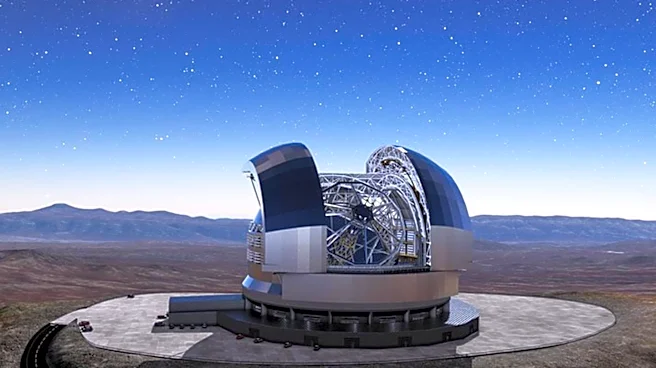
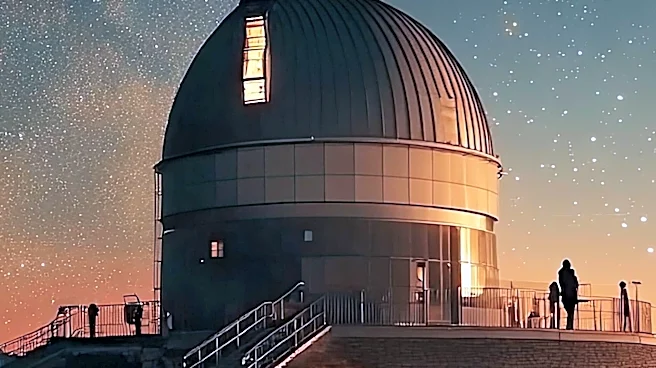
The Vera C. Rubin Observatory has commenced a comprehensive cosmic survey using the largest digital camera ever constructed. Situated on a mountaintop in Chile, the observatory will focus on the southern sky over the next ten years, capturing hundreds
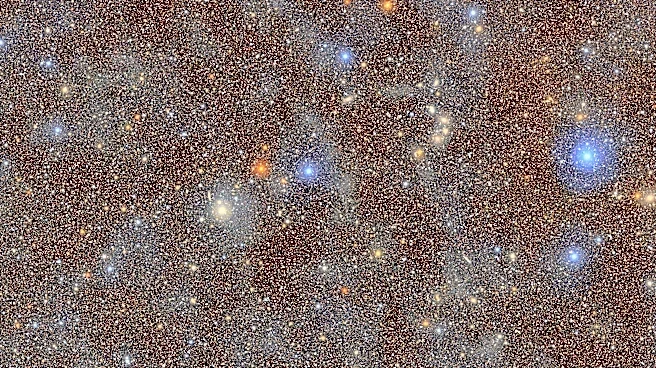
of images each night. This initiative aims to map billions of stars within the Milky Way and numerous galaxies beyond, providing unprecedented depth and detail. The observatory's camera is designed to take rapid images of the same sky areas multiple times, enabling the detection of fainter celestial objects. The project is supported by the U.S. National Science Foundation and the U.S. Department of Energy. The observatory is named after astronomer Vera Rubin, who was instrumental in providing early evidence of dark matter's existence.
Why It's Important?
This survey represents a significant advancement in astronomical research, offering scientists a new level of data to study the universe's structure and evolution. By mapping stars and galaxies with greater precision, researchers can gain insights into how galaxies form and cluster over time. Additionally, the data may provide clues about dark matter and dark energy, two of the most enigmatic components of the universe. The findings could have profound implications for our understanding of cosmology and the fundamental forces shaping the universe. The project also exemplifies international collaboration in scientific research, with data expected to be utilized by scientists worldwide.
What's Next?
As the survey progresses, scientists will analyze the vast amounts of data collected to identify patterns and anomalies in the universe's structure. The observatory's findings may lead to new theories or modifications of existing models regarding galaxy formation and the role of dark matter and dark energy. The scientific community anticipates that the data will spur further research and potentially lead to groundbreaking discoveries in astrophysics. The observatory will continue to refine its equipment and methodologies to ensure the highest quality data collection throughout the decade-long survey.