







What's Happening?
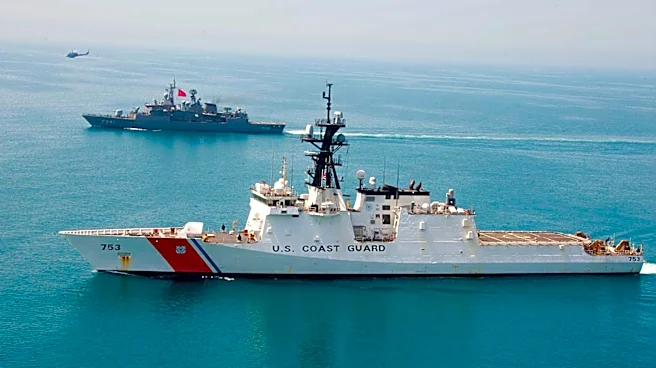
RIMPAC 2026, the world's largest international military warfare exercise, commenced on June 24th in Hawaii. This year, South Korea plays a significant role, with a South Korean admiral commanding the combined naval component for the first time. South Korea has
deployed its newest Aegis destroyer, a submarine, a frigate, an amphibious landing ship, and a naval patrol aircraft. The exercises include live-fire drills and urban practice raids, showcasing collaboration among Pacific nations. Notably, Germany and France have opted out of participating this year. The exercises are scheduled to run until July 31.
Why It's Important?
RIMPAC 2026 highlights the strategic military cooperation among Pacific nations, emphasizing the importance of maintaining a free and open Indo-Pacific region. The involvement of South Korea, particularly in a leadership role, underscores the strengthening of military alliances in the face of regional security challenges. The absence of European allies like Germany and France may reflect shifting geopolitical priorities or resource allocations. These exercises serve as a platform for participating nations to enhance interoperability and readiness, crucial for addressing potential conflicts and ensuring regional stability.
What's Next?
As RIMPAC 2026 progresses, participating nations will continue to engage in various military drills, enhancing their tactical capabilities and cooperation. The exercises may lead to further discussions on military strategies and alliances in the Indo-Pacific region. Observers will be watching for any shifts in participation or strategy from non-participating countries like Germany and France, which could influence future military collaborations. The outcomes of RIMPAC 2026 could impact future defense policies and international relations in the region.
Beyond the Headlines
The RIMPAC exercises not only focus on military readiness but also on fostering diplomatic relations among participating countries. The event provides an opportunity for nations to demonstrate their commitment to regional security and cooperation. The absence of certain European allies may prompt discussions on the evolving nature of global military alliances and the balance of power in the Indo-Pacific. Additionally, the exercises highlight the importance of adapting to new technologies and warfare strategies, ensuring that military forces remain effective in a rapidly changing global landscape.