
What's Happening?
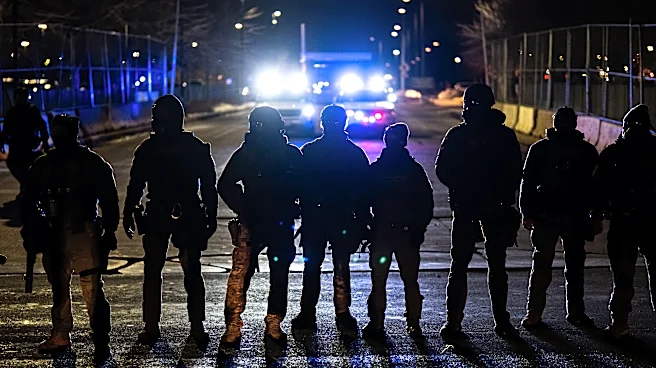
At least nine individuals were arrested during a protest against Immigration and Customs Enforcement (ICE) outside Wyckoff Heights Medical Center in Bushwick, Brooklyn. The protest was sparked by the presence
of ICE officers who had brought a detainee, Chidozie Wilson Okeke, to the hospital for medical evaluation. The situation escalated as hundreds of protesters gathered, leading to a confrontation that lasted approximately five hours. During the incident, four New York City Police Department (NYPD) officers were reportedly pepper-sprayed by ICE officers. Council Member Sandy Nurse criticized the NYPD for allegedly assisting ICE, which she claims violates New York City's sanctuary city laws. However, the NYPD denied any coordination with ICE, stating their actions were aimed at de-escalating the situation to allow ambulances access to the emergency room.
Why It's Important?
The protest highlights ongoing tensions between local law enforcement and federal immigration authorities in sanctuary cities like New York. Sanctuary city laws are designed to limit cooperation with federal immigration enforcement, aiming to protect undocumented immigrants from deportation. The incident raises questions about the enforcement of these laws and the role of local police in immigration-related activities. The arrests and the use of force by ICE could further strain relations between immigrant communities and law enforcement, potentially impacting public trust and cooperation. This event underscores the broader national debate over immigration policies and the rights of undocumented individuals in the U.S.
What's Next?
The incident may prompt further scrutiny of the NYPD's actions and their compliance with sanctuary city laws. Local officials and immigrant advocacy groups are likely to call for investigations into the conduct of both ICE and the NYPD during the protest. This could lead to policy reviews or changes in how local law enforcement interacts with federal immigration authorities. Additionally, the event may fuel ongoing discussions about the effectiveness and enforcement of sanctuary city policies, potentially influencing future legislative actions at both the city and state levels.