
What's Happening?
A team from MIT, including lead author Leo Kozachkov and senior author Dmitry Krotov, has proposed a new hypothesis regarding the role of astrocytes in memory storage. Traditionally considered support
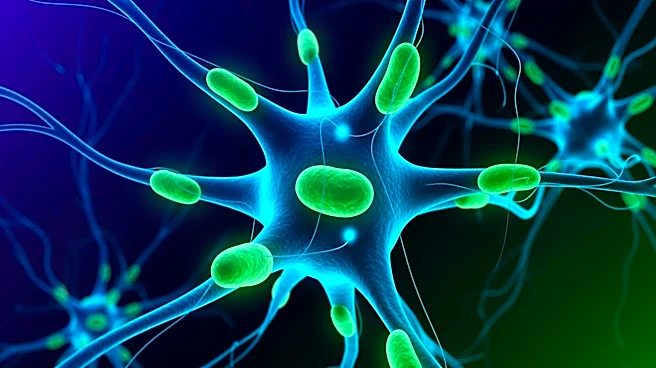
cells, astrocytes may play a computational role in memory encoding, potentially explaining the human brain's vast memory capacity. The researchers suggest that astrocytes form tripartite synapses with neurons, facilitating higher-order coupling necessary for dense associative memory. This model challenges the conventional neuron-centric view of memory storage, proposing that astrocytes contribute to the brain's ability to store large amounts of information.
Why It's Important?
This hypothesis could revolutionize the understanding of memory storage in the brain, shifting the focus from neurons to astrocytes as key players in cognitive processes. If validated, this model may lead to new approaches in studying and treating memory-related disorders. The research highlights the potential for astrocytes to enhance the brain's computational efficiency, offering insights into the mechanisms underlying human cognition. This could have far-reaching implications for neuroscience, artificial intelligence, and the development of memory-enhancing technologies.
What's Next?
The MIT team acknowledges that their hypothesis requires experimental validation. Future research will need to test the model's predictions and explore the role of astrocytes in memory storage. If confirmed, this could prompt a reevaluation of existing theories on brain function and memory. The findings may inspire new lines of inquiry into the cellular and molecular mechanisms of memory, potentially leading to breakthroughs in understanding and treating cognitive disorders.