





What's Happening?
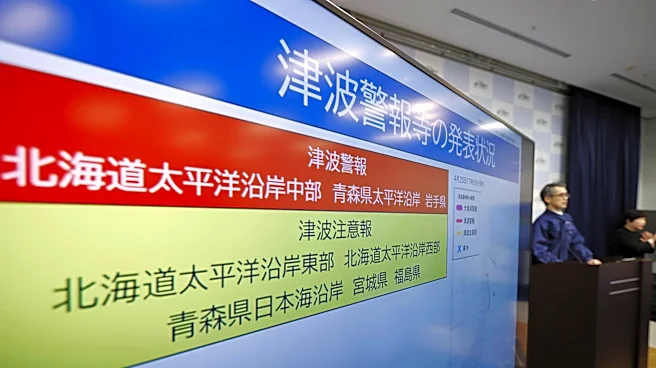
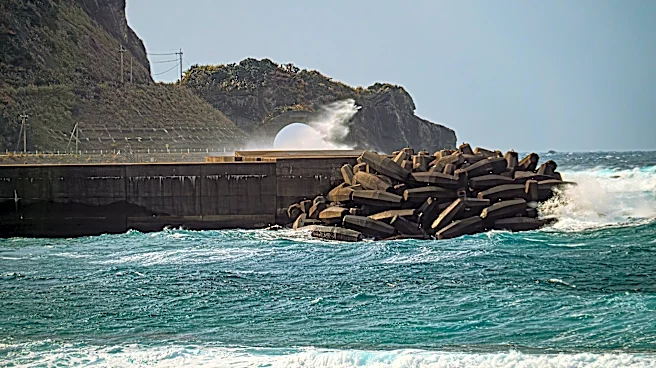
A magnitude 7.7 earthquake struck off the northeastern coast of Japan, prompting tsunami warnings and advisories. The quake, which occurred at a depth of 20 km in the Pacific Ocean, led to tsunami waves of up to 80 cm being detected. Authorities issued
evacuation orders for several coastal towns, and transportation services were disrupted. The Japan Meteorological Agency warned of a heightened risk of a megaquake in the coming week. Despite the severity of the quake, no immediate casualties or major damage were reported, and no abnormalities were found at idled nuclear plants in the affected areas.
Why It's Important?
Japan is located in a seismically active region known as the 'Ring of Fire,' making it prone to frequent earthquakes. The recent quake underscores the ongoing risk of natural disasters in the region and the importance of preparedness and early warning systems. The potential for a megaquake poses significant risks to infrastructure, public safety, and economic stability. The event also highlights the resilience and response capabilities of Japanese authorities in managing such crises, which are crucial for minimizing damage and ensuring public safety.
What's Next?
Authorities will continue to monitor seismic activity in the region, with heightened vigilance for potential aftershocks or further seismic events. Residents in affected areas are advised to remain alert and follow safety protocols. The government may review and update disaster preparedness plans to enhance resilience against future earthquakes. International observers will also watch for any broader impacts on global markets, particularly in sectors reliant on Japanese exports.