






What's Happening?
The United States is preparing to issue a directive to several countries, urging them to align exclusively with either a US-led artificial intelligence coalition or China's competing framework. According to a US official and an internal draft reviewed
by Reuters, countries that join Beijing's initiative will be excluded from the US-led AI coalition. This move is part of Washington's broader strategy to secure supply chains for AI models, semiconductors, and critical minerals, an effort initiated last year with the launch of the Pax Silica initiative. The draft letter, prepared by the State Department, is addressed to the 35 signatories of a US 'AI Opportunity Statement' and emphasizes that participation in the Pax Silica Declaration is a commitment that cannot be held alongside membership in 'duplicative initiatives whose expectations conflict with our own.' The US aims to prevent countries from simultaneously engaging with both frameworks, particularly after Kazakhstan, a key source of critical minerals, joined both the Pax Silica initiative and China's rival 'World Artificial Intelligence Cooperation Organization,' which was launched by Chinese President Xi Jinping in July.
Why It's Important?
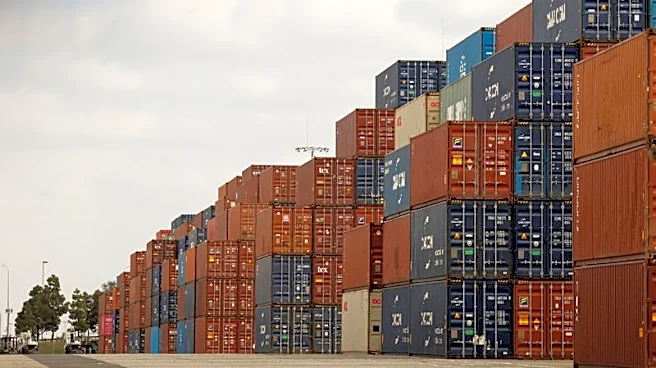
This development significantly escalates the technological rivalry between the United States and China, forcing nations to make a strategic choice that could reshape global technological alliances and supply chains. The US objective is to limit China's access to essential resources and expertise required for advanced AI development, thereby maintaining its own technological leadership and national security interests. By pressing countries to choose, Washington seeks to reduce its reliance on adversaries for critical minerals and AI components, a concern highlighted by China's past use of its near-monopolies over critical minerals as a retaliatory weapon during a tariff war launched by President Trump. The outcome of these choices will determine the future landscape of AI innovation, potentially leading to a more bifurcated global technology ecosystem where countries align with one dominant power bloc, impacting economic stakeholders, research collaboration, and military capabilities worldwide.
What's Next?
The exact timing for the US to send this draft letter remains uncertain, and it may undergo amendments before its final dispatch. Once issued, countries will face increased pressure to formally declare their allegiance in the burgeoning AI competition. This could lead to a re-evaluation of existing international partnerships and potentially trigger shifts in global supply chain configurations for critical technologies. Major stakeholders, including technology companies, research institutions, and governments, will need to adapt to a more polarized environment. The US will likely continue to promote the benefits of its Pax Silica initiative, offering shared investment opportunities and export controls, while China is expected to further advance its own AI cooperation framework, potentially intensifying the competition for global influence and technological dominance.
Beyond the Headlines
This strategic maneuver by the US transcends mere technological competition, reflecting a deeper geopolitical struggle for global influence and the establishment of future norms in artificial intelligence. The push for countries to 'pick sides' highlights a growing concern over technological sovereignty and the potential weaponization of AI capabilities. It raises fundamental questions about the ethics of AI development, data governance, and the balance between open innovation and national security. The long-term implications could include the fragmentation of global technological standards, hindering universal progress in AI, and potentially creating two distinct, incompatible technological ecosystems. This development also underscores the increasing importance of critical minerals and semiconductor supply chains as strategic assets in the 21st century, transforming them into central elements of international diplomacy and national defense strategies.