

What's Happening?
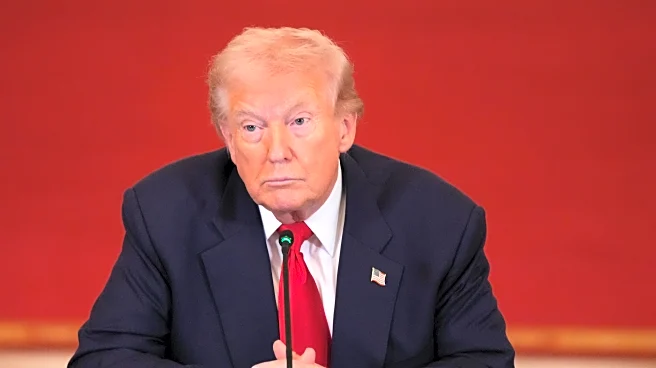
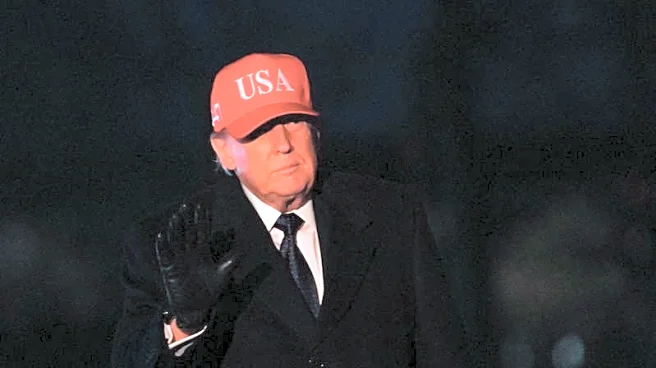
President Trump has been promoting the idea of a 'G2' world order, suggesting that the United States and China should lead global affairs as equals. This concept, initially introduced in 2005, has resurfaced with Trump's recent meetings with Chinese President Xi
Jinping. However, China has publicly rejected this notion. Chinese Foreign Minister Wang Yi, during a news conference, emphasized that China does not seek hegemony or expansion and aims for an equal and orderly multipolar world. Wang highlighted the historical consequences of great power rivalries and stated that China does not subscribe to the idea that major countries should dominate global governance. The 'G2' concept raises concerns among U.S. allies about being excluded from significant decision-making processes.
Why It's Important?
The rejection of the 'G2' concept by China underscores the complexities in U.S.-China relations and the broader implications for global governance. The idea of a 'G2' world order could potentially marginalize other nations, leading to geopolitical tensions. China's stance reflects its diplomatic strategy of promoting multipolarity and resisting unilateral dominance by any major power. This development is significant for U.S. allies who fear being sidelined in international affairs. The ongoing dialogue between the U.S. and China is crucial, as their relationship has far-reaching impacts on global economic and political stability. The emphasis on multipolarity by China may influence future international collaborations and the balance of power.
What's Next?
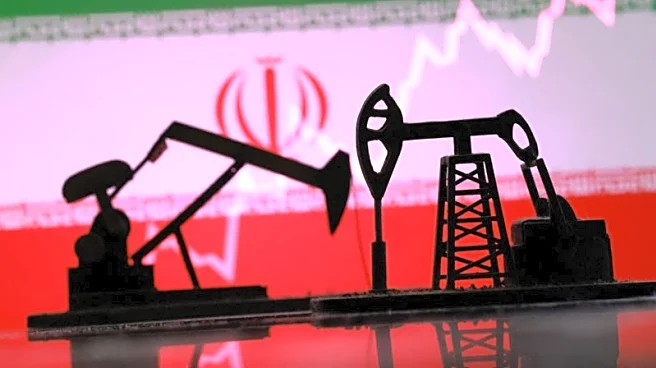
President Trump and President Xi are scheduled to meet multiple times throughout the year, starting with Trump's visit to China at the end of March. These meetings are expected to address various bilateral and global issues, including trade and regional security. The ongoing U.S.-Israeli military actions in Iran, a country with close ties to China, could pose a challenge to these discussions. China has called for a halt to military actions and a return to dialogue, emphasizing the need for peaceful resolutions. The outcomes of these high-level meetings will likely shape the future trajectory of U.S.-China relations and their roles in global governance.
Beyond the Headlines
China's rejection of the 'G2' concept highlights its strategic positioning in the global order. By advocating for a multipolar world, China seeks to align itself with the Global South and other nations that oppose major power dominance. This stance may enhance China's influence in international forums and strengthen its diplomatic ties with countries wary of U.S. unilateralism. The emphasis on multipolarity also reflects China's reluctance to assume greater responsibilities in global conflicts, such as those in the Middle East, which have historically involved the U.S. The evolving dynamics between the U.S. and China will continue to shape international relations and the global balance of power.