





What's Happening?
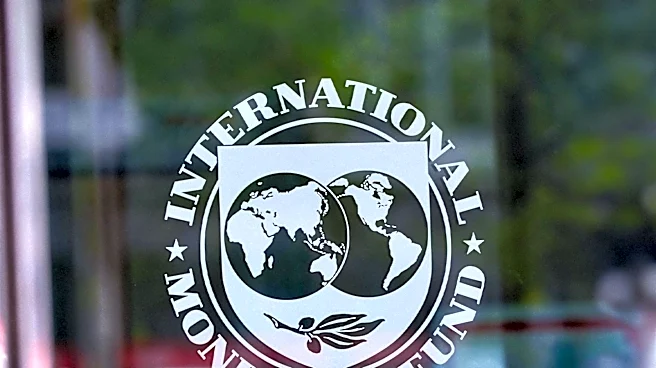
The International Monetary Fund (IMF) has announced a staff-level agreement with Sierra Leone for approximately $78.2 million in financial support. This agreement follows the fourth review of Sierra Leone’s Extended Credit Facility (ECF) and the first
review of its Resilience and Sustainability Facility (RSF). The funding, which includes $31.5 million under the ECF and $46.7 million under the RSF, is subject to approval by the IMF Executive Board and the completion of agreed-upon prior actions. The IMF mission, led by Jeta Menkulasi, conducted discussions in Freetown from October 28 to November 10. The agreement comes as Sierra Leone faces economic challenges, including rising inflation, projected to reach 19% by the end of 2026, up from 17.1% in September. High global oil prices are cited as a significant factor contributing to inflation and increased demand for foreign exchange, putting pressure on the nation's fiscal stability. Despite these strains, the IMF noted that Sierra Leone's economic reform program remains broadly on track.
Why It's Important?
This IMF agreement is crucial for Sierra Leone as it provides much-needed financial assistance to address mounting economic pressures. The $78.2 million injection aims to bolster the country's macroeconomic stability and support its ongoing reform efforts. The funds are particularly vital given the projected rise in inflation and the fiscal and foreign-exchange pressures threatening recent stabilization gains. The IMF's endorsement signals confidence in the government's commitment to fiscal discipline, domestic revenue mobilization, and debt sustainability. For the U.S. and international community, supporting Sierra Leone's economic stability can prevent broader regional instability and foster a more predictable environment for trade and investment. The focus on protecting priority social spending, such as the school-feeding program, also highlights the humanitarian aspect of the agreement, aiming to mitigate the impact of economic hardship on vulnerable populations. The deal underscores the IMF's role in providing a safety net for developing economies facing external shocks.
What's Next?
The next critical step is the approval of the staff-level agreement by the IMF Executive Board, which is expected to consider both reviews in the coming weeks. Prior to disbursement, Sierra Leone must also complete agreed-upon prior actions. The government is currently preparing its 2027 budget, which is expected to incorporate fiscal adjustments, protect social programs, and address domestic arrears. An independent audit of arrears has identified weaknesses in public financial management, and authorities have committed to publishing these findings and implementing a clearance strategy. The Bank of Sierra Leone is expected to maintain a focus on monetary policy to bring inflation back to single-digit targets, with readiness to tighten further if necessary. Rebuilding international reserves through tighter control of government foreign-exchange spending and improved repatriation of export proceeds remains a priority. The IMF has also highlighted substantial risks, including potential increases in global oil or food prices, political uncertainty ahead of the 2028 elections, or climate shocks, which could renew pressure on the economy.
Beyond the Headlines
Beyond the immediate financial relief, this agreement highlights the persistent vulnerability of developing economies to global economic fluctuations, particularly commodity price shocks. Sierra Leone's commitment to publishing audit findings on arrears and tightening controls on public spending reflects a broader push for transparency and good governance, which are essential for sustainable economic development and attracting foreign investment. The inclusion of the Resilience and Sustainability Facility (RSF) also underscores the growing recognition of climate change as a significant economic risk, with reforms aimed at enhancing climate resilience. This integrated approach, combining traditional fiscal and monetary discipline with climate adaptation measures, represents an evolving strategy for international financial institutions. The political uncertainty noted ahead of the 2028 elections also points to the complex interplay between economic stability and political cycles in emerging democracies, where economic reforms can be sensitive to electoral considerations.