


What's Happening?
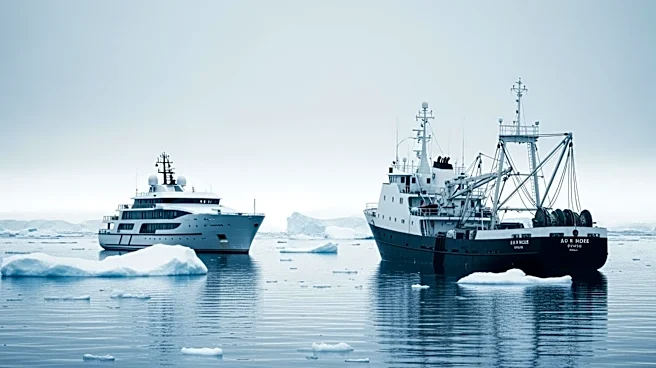
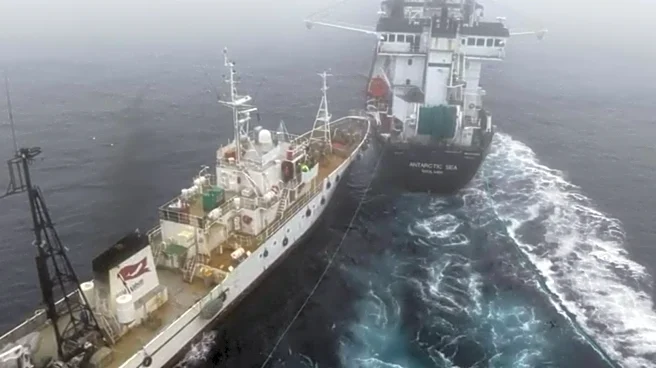
The Captain Paul Watson Foundation has launched a campaign called 'Operation Krill Wars' to confront industrial krill fishing in Antarctica. The foundation's vessel, Bandero, engaged in what it describes as 'aggressive nonviolence' to disrupt krill fishing operations
by the Norwegian company Aker Qrill. The Bandero, a former Japanese fisheries patrol vessel, was acquired by the foundation in 2024 and is now being used to protect krill, a primary food source for whales. The foundation's actions included attempting to disrupt fishing operations for over five hours and using a device to shred metal fishing nets. Aker Qrill, which operates the largest krill fishing vessel in Antarctica, reported the incident as a 'deliberate attack' and plans to pursue legal action.
Why It's Important?
This intervention highlights the ongoing conflict between environmental activists and industrial fishing operations over the sustainability of marine resources. Krill is crucial to the Antarctic ecosystem, serving as a primary food source for whales and other marine life. The foundation's actions underscore the urgency environmental groups feel in protecting these resources from overfishing, which they argue threatens biodiversity and ecological balance. The incident also raises questions about the legality and ethics of direct action tactics used by environmental groups, as well as the responsibilities of companies like Aker Qrill in managing natural resources sustainably.
What's Next?
Aker Qrill is expected to pursue legal action against the Captain Paul Watson Foundation, which could lead to a legal battle over the rights and responsibilities of environmental activism versus industrial fishing. The foundation may continue its campaign against krill fishing, potentially leading to further confrontations. This situation could prompt discussions among international regulatory bodies about the management of krill fishing quotas and the protection of Antarctic ecosystems. Stakeholders, including environmental groups, governments, and the fishing industry, may need to engage in dialogue to find sustainable solutions.
Beyond the Headlines
The intervention by the Captain Paul Watson Foundation could influence public opinion and policy regarding marine conservation. It highlights the broader ethical debate over the use of aggressive tactics in environmental activism and the balance between economic interests and ecological preservation. The incident may also draw attention to the need for international cooperation in managing shared natural resources and protecting vulnerable ecosystems from exploitation.