






What's Happening?
A new impact synthesis report, developed by the Centre for Humanitarian Dialogue (HD) and adelphi, examines the escalating farmer-herder conflicts in Nigeria's Middle Belt. The report, drawing on an outcome evaluation of the project 'Multi-Level Approaches
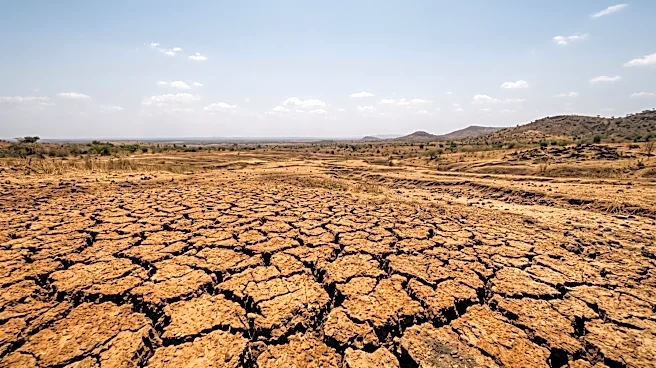
to Sustainable Peace in Nigeria's Middle Belt (2022–2026),' highlights how climate-driven droughts and irregular rainfall are intensifying competition for natural resources such as land, water, and grazing areas. These conflicts have resulted in thousands of fatalities across the region. The synthesis assesses the effectiveness of climate-sensitive peace agreements in reducing violence across Benue, Nasarawa, Plateau, and Taraba states. Key outcomes include three local natural resource peace agreements benefiting over half a million people, with reported declines in violence, and the signing of Nigeria's first statewide natural resource peace agreement in Benue State. The project also fostered locally led climate adaptation initiatives, such as land rehabilitation and water conservation, and revitalized livelihoods through reopened markets and roads.
Why It's Important?
This report underscores the critical link between climate change and conflict, particularly in vulnerable regions like Nigeria's Middle Belt. The intensification of farmer-herder conflicts due to environmental degradation poses significant humanitarian and security challenges, leading to displacement, loss of life, and disruption of livelihoods. For the U.S. and international community, understanding these dynamics is crucial for effective foreign policy and aid strategies. The success of climate-sensitive peace agreements demonstrates a viable pathway to mitigating conflict by addressing root causes related to resource scarcity. This approach offers a model for other regions facing similar climate-induced tensions, highlighting the importance of integrating climate adaptation with peacebuilding efforts. The report's findings can inform U.S. development agencies and NGOs on how to better support sustainable peace and resilience in conflict-affected areas, emphasizing the need for cross-sectoral partnerships and engagement with local leaders.
What's Next?
The report provides recommendations for future programming and donor support, emphasizing the need to facilitate cross-sectoral partnerships from the outset. This suggests that future interventions will likely focus on collaborative efforts between humanitarian, development, and environmental organizations. Investment in scalable multi-level peace processes with robust implementation and monitoring frameworks is also recommended, indicating a move towards more comprehensive and long-term solutions. Building the capacity of traditional leaders alongside inclusive, gender-responsive dialogue structures is highlighted as essential for lasting peace. This implies that future peacebuilding initiatives will continue to empower local actors and ensure broad community participation. The ongoing challenge will be to scale up these successful local approaches to create coherent regional frameworks for managing farmer-herder conflicts, ensuring that climate adaptation provisions are effectively integrated into peace agreements and implemented on a wider scale.
Beyond the Headlines
The nexus between climate change and conflict in Nigeria's Middle Belt reveals deeper ethical and societal implications. The displacement and violence disproportionately affect vulnerable populations, raising questions about environmental justice and the responsibility of global actors in addressing climate change impacts. The report's emphasis on locally led climate adaptation initiatives and engagement with traditional leaders highlights the importance of indigenous knowledge and community-based solutions in fostering resilience. This approach challenges top-down interventions and promotes a more inclusive model of peacebuilding. Furthermore, the success of these climate-sensitive peace agreements could serve as a blueprint for addressing similar resource-based conflicts globally, demonstrating that environmental stewardship and conflict resolution are intrinsically linked. The long-term shift could be towards a more integrated approach to security, where climate policy is recognized as a fundamental component of peace and stability efforts, requiring sustained international cooperation and investment.