






What's Happening?
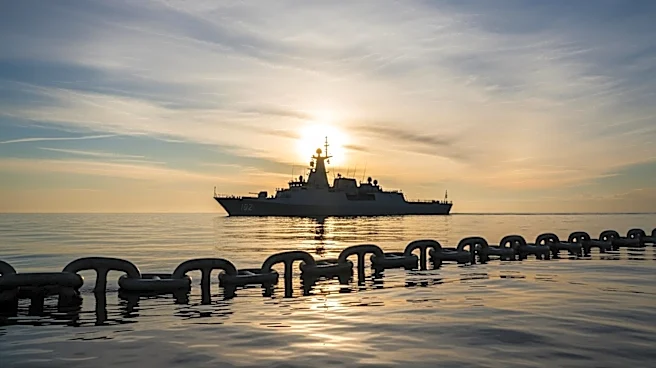
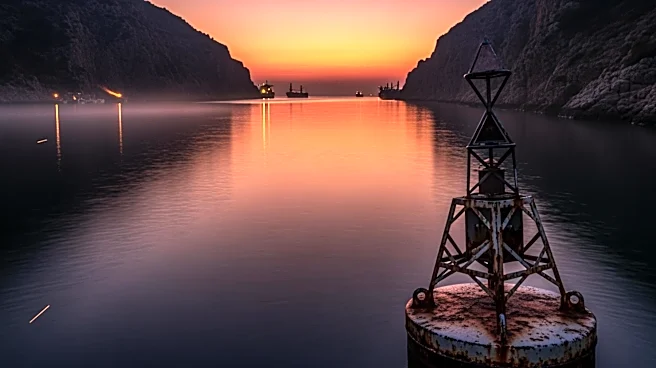
Iran has reimposed restrictions on the Strait of Hormuz, citing breaches of trust by the United States. This decision follows a brief period during which the strait was reopened for commercial traffic. The move has exposed internal divisions within Iran's
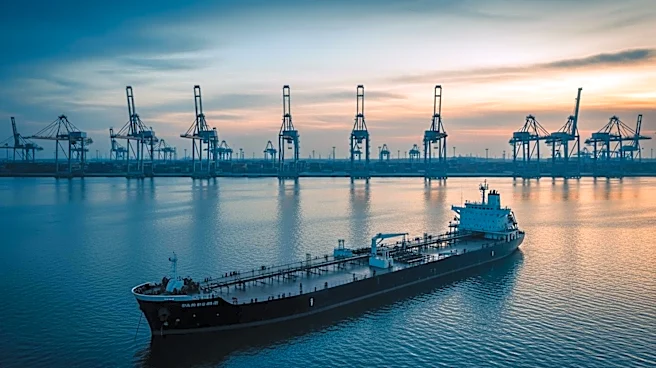
leadership, particularly between the Islamic Revolutionary Guard Corps (IRGC) and the more pragmatic political leadership. The IRGC's influence appears to be growing, as it pushes for a hardline stance against the U.S. The strait is a critical chokepoint for global oil and natural gas trade, and its closure has significant implications for international markets.
Why It's Important?
The reimposition of restrictions on the Strait of Hormuz highlights the fragility of the current ceasefire and the challenges in achieving a lasting peace agreement. The strait's closure can lead to increased oil and natural gas prices, affecting global economies. The internal power struggle within Iran's leadership complicates diplomatic efforts and underscores the difficulty in reaching a consensus on foreign policy. The situation also reflects broader geopolitical tensions in the region, with potential implications for U.S. foreign policy and international relations.
What's Next?
The immediate focus will be on diplomatic efforts to address the underlying issues and prevent further escalation. The United States and Iran may need to engage in direct negotiations to rebuild trust and find a mutually acceptable solution. The international community, including regional powers, may play a role in facilitating dialogue and ensuring compliance with agreements. The potential for military confrontation remains a concern, particularly if the ceasefire collapses or if Iran takes further aggressive actions.