
What's Happening?
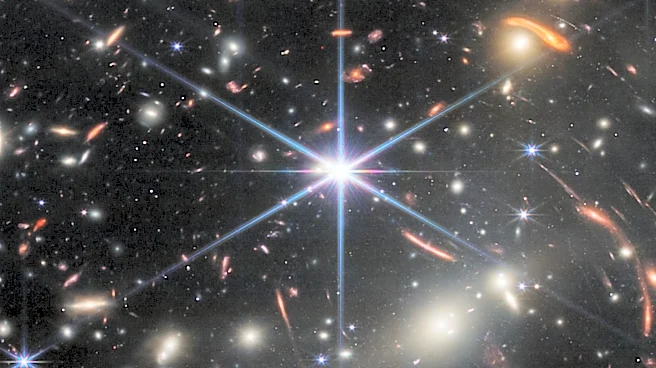
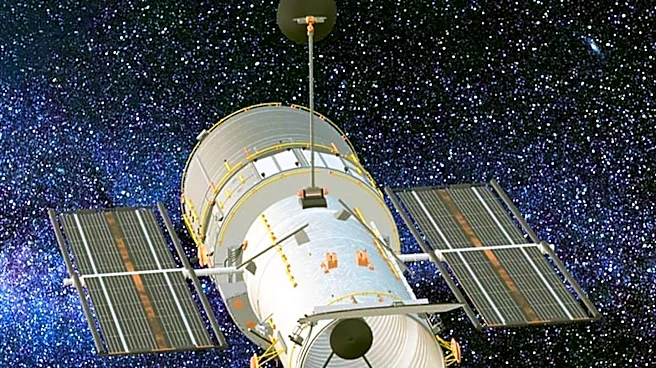
The Hubble Space Telescope, alongside the James Webb Space Telescope, has observed a galaxy cluster known as SPT2349-56, which contains about 30 star-forming galaxies. Among these, a galaxy named C26 is
of particular interest due to its comet-like shape, featuring a head and a tail with a dense, bright region called the 'knot.' This galaxy is undergoing a process known as ram-pressure stripping, where it is losing its star-forming gas as it moves through a hot, dense gas medium. This phenomenon is causing the galaxy to lose its ability to form new stars, effectively leading it towards becoming a 'red and dead' galaxy. The study, led by Dazhi Zhou from the University of British Columbia, provides insights into the early universe's galaxy evolution, as this process is occurring just 1.4 billion years after the Big Bang.
Why It's Important?
This discovery is significant as it provides a glimpse into the processes that lead to the cessation of star formation in galaxies, a key aspect of understanding galaxy evolution. The findings suggest that ram-pressure stripping can occur in young galaxy clusters, challenging previous assumptions that such processes require mature clusters. This has implications for our understanding of how galaxies evolve and the conditions necessary for star formation to cease. The study of C26 and its environment could help astronomers understand why some galaxies stop forming stars earlier than expected, contributing to the broader puzzle of galaxy evolution in the early universe.
What's Next?
Future studies with high-resolution data from ALMA and the James Webb Space Telescope are expected to provide more detailed insights into the interaction between the hot gas in galaxy clusters and the star-forming gas of cluster members. These studies could further elucidate the mechanisms behind ram-pressure stripping and its role in galaxy evolution. Additionally, understanding the conditions that lead to the quenching of star formation could inform models of galaxy formation and evolution, offering a clearer picture of the universe's history.
Beyond the Headlines
The observation of C26 and its transformation into a 'red and dead' galaxy highlights the dynamic and often violent processes that shape galaxies. This study underscores the importance of advanced telescopes like Hubble and James Webb in uncovering the mysteries of the universe. The findings also raise questions about the role of environmental factors in galaxy evolution and the potential for similar processes to occur in other parts of the universe.