


What's Happening?
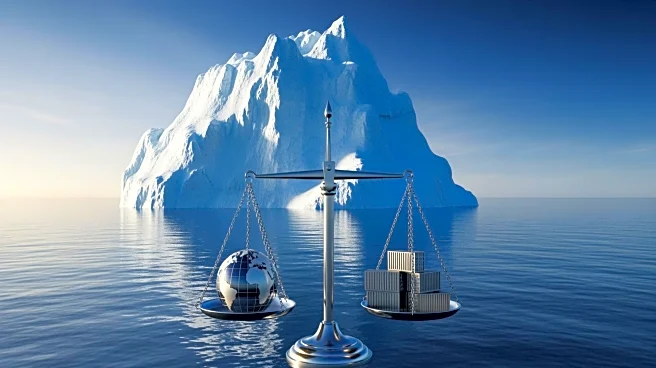
President Trump has announced plans to impose tariffs on eight European countries as part of a strategy to acquire Greenland. This announcement coincides with a visit by a U.S. congressional delegation to Denmark aimed at easing tensions. The move has escalated
diplomatic tensions across Europe, as the U.S. administration seeks to leverage economic pressure to achieve its territorial ambitions. The proposal to acquire Greenland has been a contentious issue, with Denmark, which governs Greenland, previously rejecting the idea. The imposition of tariffs is seen as a significant escalation in the U.S.'s approach to the matter.
Why It's Important?
The imposition of tariffs on European countries could have significant economic repercussions, potentially affecting trade relations between the U.S. and Europe. Such measures could lead to retaliatory actions from the affected countries, further straining diplomatic ties. The situation underscores the complexities of international diplomacy and the potential for economic tools to be used in geopolitical negotiations. For the U.S., acquiring Greenland could have strategic benefits, including access to natural resources and increased influence in the Arctic region. However, the approach taken by the Trump administration may lead to broader geopolitical tensions and impact global markets.
What's Next?
The next steps in this diplomatic standoff are uncertain, but potential outcomes include negotiations between the U.S. and European countries to resolve the tariff issue. The congressional delegation's visit to Denmark may provide an opportunity for dialogue and de-escalation. European countries affected by the tariffs may seek to engage in diplomatic discussions or consider countermeasures. The international community will likely monitor the situation closely, given its potential impact on global trade and diplomatic relations. The outcome of these developments could influence future U.S. foreign policy and its approach to international negotiations.