
What's Happening?
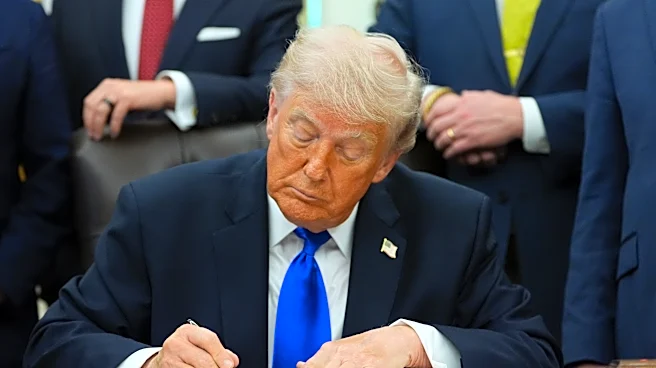
President Donald Trump has announced plans to increase tariffs on European Union cars and trucks to 25%, citing non-compliance with a trade deal established last year. The agreement, known as the Turnberry
Agreement, initially set a 15% tariff cap on EU auto imports. The announcement follows a Supreme Court ruling that questioned Trump's authority to impose tariffs under an economic emergency. The EU has expressed its expectation for the U.S. to honor the commitments of the trade deal, emphasizing the importance of maintaining competitive treatment for EU products.
Why It's Important?
This tariff increase could disrupt the global economy, particularly affecting the EU's automotive sector, with Germany being a major exporter. The decision may lead to increased tensions between the U.S. and EU, potentially resulting in retaliatory tariffs or other economic measures. The move also highlights the challenges of maintaining international trade agreements and the potential for economic instability. For the U.S., this could mean higher costs for imported vehicles, impacting consumers and potentially contributing to inflationary pressures.
What's Next?
The European Union is likely to seek diplomatic solutions or legal action to address the tariff increase. This development may also influence future trade negotiations and agreements between the U.S. and other international partners. The situation could lead to further political and economic discussions within the EU and impact the broader international trade landscape.