





What's Happening?
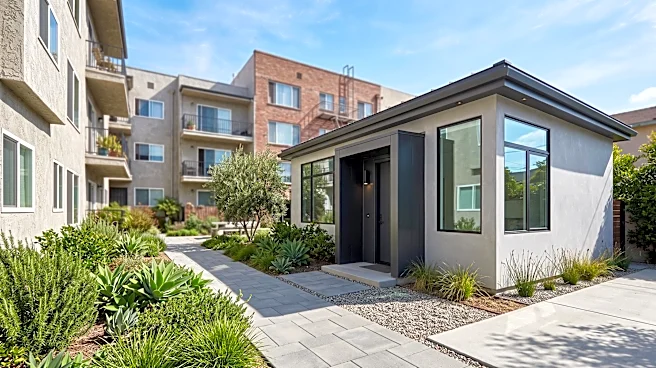
Landlords across Los Angeles are converting garages and parking lots into new apartments, known as Accessory Dwelling Units (ADUs), a practice facilitated by California's Senate Bill 1211, which took effect in January 2025. This law aims to ease the state's
housing shortage by making it easier to add ADUs to multi-apartment properties and explicitly bars cities from requiring landlords to replace lost parking spaces. Consequently, many tenants are losing their guaranteed parking, which they claim was part of their original leases. This has led to numerous lawsuits against landlords, with some tenants also naming the city. Older and disabled residents are particularly affected, citing significant challenges in accessing transportation and essential services without their parking spaces.
Why It's Important?
This situation highlights a direct conflict between California's housing affordability goals and the immediate needs of existing tenants, particularly vulnerable populations. While SB 1211 is intended to increase housing supply, its implementation has created unintended consequences, forcing tenants to contend with reduced mobility and increased living costs due to the loss of parking. The lawsuits raise critical legal questions about the sanctity of lease agreements and whether state laws can override existing tenant protections or fair housing regulations. The debate also underscores the broader challenge of urban planning in dense areas, where the push for more housing often clashes with infrastructure limitations and quality-of-life concerns for current residents. The city's position, while sympathetic to tenants, emphasizes its inability to override state law, creating a complex legal and social dilemma.
What's Next?
The ongoing lawsuits will determine the legal precedent for tenant rights regarding parking in the context of ADU conversions. A judge has already halted construction in one Hollywood case, indicating potential legal challenges for landlords. Los Angeles planning officials suggest that tenants losing parking may qualify for rent reductions or request new disabled parking spaces, but these measures may not fully address the impact on mobility and convenience. The outcome of these legal battles could influence future legislative adjustments to SB 1211 or lead to new local ordinances designed to mitigate the negative effects on tenants. The situation may also prompt a re-evaluation of how housing density initiatives are balanced with the needs of existing communities, particularly those with limited access to alternative transportation.
Beyond the Headlines
This issue delves into the ethical considerations of urban development and the social contract between landlords, tenants, and the state. It exposes the tension between the abstract goal of increasing housing supply and the concrete impact on individual lives, especially for those with limited mobility or fixed incomes. The argument that 'homes matter more than parking' simplifies a complex issue, as parking can be a lifeline for many, particularly in car-dependent cities like Los Angeles. The situation also raises questions about the long-term vision for urban mobility and whether policies are adequately preparing for a future with reduced car reliance. Ultimately, this conflict forces a deeper examination of who benefits from housing policies and whether the costs are disproportionately borne by the most vulnerable members of society.