








What's Happening?
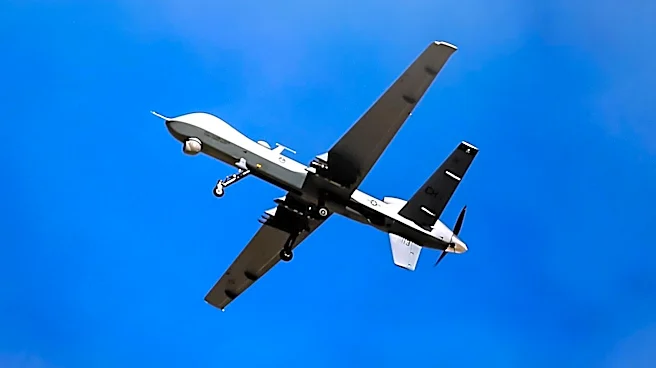
The Department of the Navy's Direct Reporting Portfolio Manager for Robotic and Autonomous Systems (DRPM RAS) is inviting industry participants for a cargo drone demonstration to support the Marine Corps. This event, named the Tactical Resupply Unmanned
Aircraft System (TRUAS) Increment II Cargo UAS Industry Demonstration, is scheduled to take place in Huntsville, Alabama, from January 25 to February 5, 2027. The DRPM RAS 4.0 Air Warfare Program Management Office at Naval Air Station Patuxent River, Maryland, is sponsoring the demonstration. This initiative marks one of the first public industry calls from DRPM RAS since its establishment in August by Acting Secretary of the Navy Hung Cao. The office was created to streamline the development, requirements, and acquisition of robotic and autonomous systems across the department, addressing previous fragmented practices that reportedly slowed delivery and complicated industry engagement. Christopher Miller serves as acting DRPM RAS and as acting portfolio acquisition executive for RAS. The Marine Corps aims to enhance its Unmanned Logistics System – Air (ULS-A) mission with these drones, providing aerial distribution for small-unit logistics in Expeditionary Advanced Base Operations.
Why It's Important?
This initiative is crucial for enhancing the logistical capabilities of the U.S. Marine Corps, particularly in challenging operational environments. By seeking advanced cargo drones, the Navy aims to provide an organic aerial resupply capability for the 'last tactical mile,' which is often the most difficult and dangerous segment of logistics. This directly supports the Marine Corps' operational concepts of Expeditionary Advanced Base Operations and Distributed Operations, where units may be dispersed and require rapid, autonomous resupply without relying on traditional, more vulnerable supply lines. The establishment of DRPM RAS itself signifies a strategic shift within the Navy to accelerate the integration of robotic and autonomous systems, recognizing their critical role in future warfare. Successful development and deployment of these drones could significantly reduce risks to personnel involved in logistics, improve operational tempo, and enhance the overall effectiveness of Marine Corps units in forward-deployed scenarios. It also opens significant opportunities for defense contractors and technology firms specializing in unmanned aerial systems.
What's Next?
Following the demonstration in early 2027, the Navy may award one or more Other Transaction prototype agreements under 10 U.S.C. § 4022. These awards will be based on the demonstrated performance of the aircraft against key performance parameters and key system attributes. Companies selected for an award must join the Naval Aviation Systems Consortium to be eligible. A successful prototype could potentially lead to a follow-on production agreement without further competition, offering a direct path for companies to supply the Marine Corps with these critical systems. Additionally, the Navy may share flight data from the demonstration with the Army-managed Drones.Mil Marketplace, potentially broadening the impact and utility of the tested technologies across different branches of the U.S. military. Industry participants are required to submit a 3- to 5-page white paper and a questionnaire through the Naval Aviation Systems Consortium by November 30, 2026, with selected participants to be notified by December 18, 2026.
Beyond the Headlines
The Navy's push for advanced cargo drones reflects a broader strategic pivot towards unmanned systems in military logistics, signaling a long-term shift in how military forces will operate and sustain themselves in future conflicts. This move has implications beyond immediate tactical advantages, potentially influencing defense spending priorities, technological innovation in the aerospace sector, and the development of new operational doctrines. The emphasis on 'last tactical mile' logistics highlights the increasing importance of decentralized operations and the need for resilient supply chains that can operate in contested environments. Furthermore, the Navy's structured approach through DRPM RAS aims to foster a more efficient acquisition process, potentially setting a precedent for how the Department of Defense engages with industry for emerging technologies. This could lead to faster integration of cutting-edge solutions, but also raises questions about the balance between rapid prototyping and rigorous testing for reliability and security in complex military applications.