



What's Happening?
A new survey released by Michigan State University's Institute for Public Policy and Social Research (IPPSR) indicates that Democratic nominees are leading their Republican rivals in Michigan's races for governor and an open U.S. Senate seat. The 'State
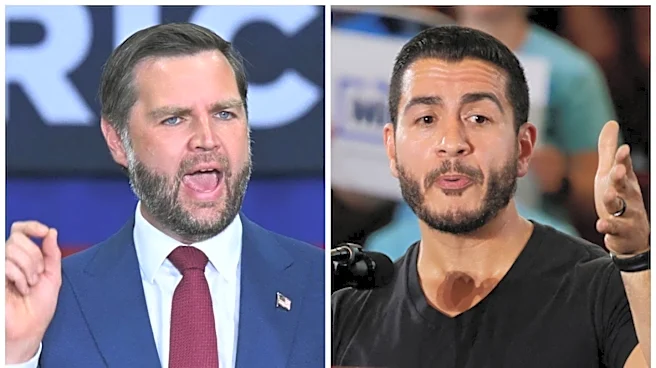
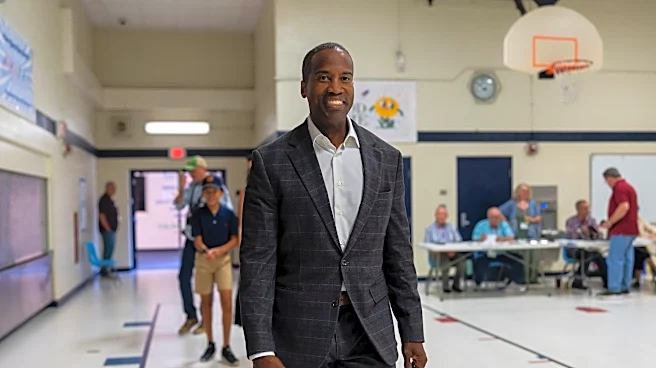
of the State Survey,' updated on September 1, shows Michigan Secretary of State Jocelyn Benson with a 9-percentage-point lead over U.S. Rep. John James in the gubernatorial race, with Benson at 52% and James at 43% among likely voters. In the U.S. Senate race, former Wayne County and Detroit health director Abdul El-Sayed holds a 5-point lead over former U.S. Rep. Mike Rogers, with El-Sayed at 50% and Rogers at 45%. These findings align with a separate poll conducted by EPIC-MRA of Lansing, which also showed both Benson and El-Sayed with a 4-percentage-point lead in their respective races. The IPPSR survey, conducted between August 10-20, interviewed 1,000 Michigan adult residents, including 779 likely voters, with a margin of error of plus or minus 4 percentage points for the sample of likely voters.
Why It's Important?
These poll results are significant as they provide an early indication of voter sentiment in key Michigan elections, a state often considered a battleground in national politics. The consistent lead for Democratic candidates in both the gubernatorial and U.S. Senate races suggests a potential shift or consolidation of support for the Democratic party in Michigan. For the Democratic Party, these leads could signal strong momentum heading into the election cycle, potentially influencing campaign strategies and resource allocation. Conversely, for the Republican Party, these numbers highlight the need to intensify their campaigns and address voter concerns to close the gap. The findings also point to a 'growing generational split within the electorate,' with El-Sayed showing stronger support among younger voters, which could impact future election strategies focusing on different demographic groups. The outcomes of these races will directly affect the balance of power in Michigan's state government and the U.S. Senate, influencing policy decisions on a range of issues from state-level governance to national legislative priorities.
What's Next?
As the election cycle progresses, both Democratic and Republican campaigns will likely intensify their efforts, using these poll results to refine their messaging and target specific voter demographics. The candidates will focus on mobilizing their bases and persuading undecided voters. Further polling data will be closely watched to track any shifts in voter sentiment. The IPPSR plans to release more detailed data from its survey in the future, which could provide deeper insights into voter preferences and concerns. Debates and public appearances by the candidates will become crucial opportunities to sway public opinion. The 'generational split' identified in the poll suggests that campaigns may tailor their outreach to younger and older voters differently, with potential implications for issues like education, healthcare, and economic policy. The national political parties will also likely increase their investment in these Michigan races, recognizing their importance for broader electoral strategies and control of the U.S. Senate.
Beyond the Headlines
The consistent polling leads for Democrats in Michigan could reflect broader national political trends or specific state-level dynamics. This situation might indicate a sustained impact of recent political events or policy decisions on the Michigan electorate. The observed 'generational split' in voter support highlights evolving political landscapes, where different age groups may prioritize distinct issues or respond to different campaign approaches. This could lead to a re-evaluation of traditional campaign strategies and a greater emphasis on digital outreach and social media engagement to reach younger voters. Furthermore, the outcomes of these races could serve as a bellwether for the national political climate, offering clues about the potential performance of each party in other competitive states. The focus on Michigan, a state with significant electoral college votes, underscores its strategic importance in U.S. politics and the continuous efforts by both parties to secure its support.