






What's Happening?
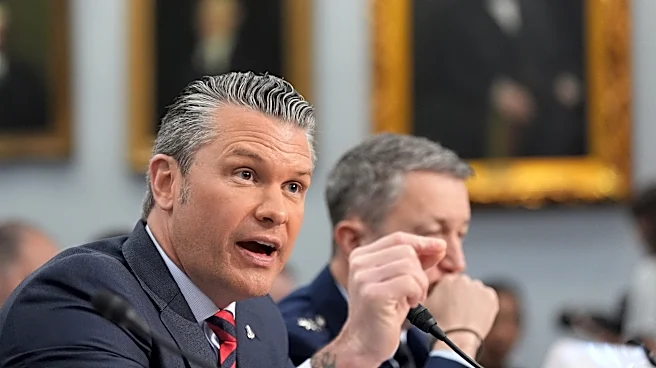
In a significant policy reversal, U.S. Defense Secretary Pete Hegseth has announced support for the acquisition of the Boeing E-7 Wedgetail, an airborne early warning and control aircraft, for the U.S. Air Force. This decision marks a departure from previous
positions held by both Hegseth and the USAF's civilian secretary, who had argued against the E-7, citing vulnerabilities in modern combat. The Trump Administration now plans to request additional funds to advance the E-7 program, which has already seen the development of two prototype aircraft. This move comes as the U.S. seeks to replace its aging fleet of E-3 Sentry aircraft, which have been deemed increasingly vulnerable.
Why It's Important?
The decision to support the E-7 acquisition underscores a shift in U.S. military strategy, emphasizing the need for robust airborne early warning capabilities. This move could enhance the U.S. Air Force's ability to manage aerial threats and maintain air superiority. The acquisition may also influence NATO's procurement strategies, as the alliance seeks to replace its own fleet of E-3 Sentries. The U.S.'s renewed interest in the E-7 could impact ongoing NATO tenders and alter the competitive landscape for defense contractors, particularly Boeing, Saab, and L3Harris.
What's Next?
The Pentagon's support for the E-7 program is likely to prompt further discussions within NATO regarding the future of airborne early warning systems. The U.S. may submit a supplemental funding request to Congress to secure the necessary resources for the E-7 acquisition. Additionally, the decision could lead to increased collaboration with allies, as the U.S. and NATO work to modernize their respective fleets. The outcome of this policy shift will be closely watched by defense industry stakeholders and international partners.