






What's Happening?
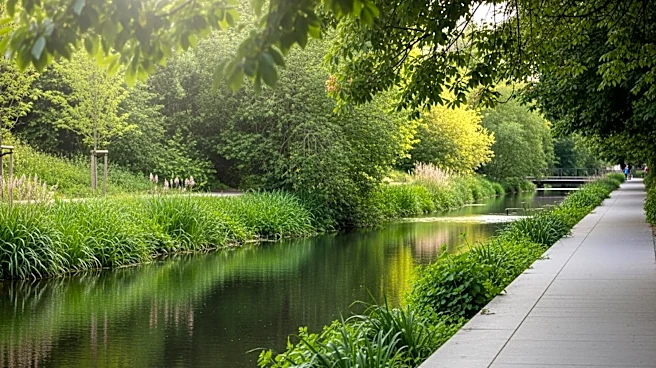
Urban waterways are increasingly being recognized for their potential to improve public health and ecological security through nature-based solutions. These solutions aim to restore urban biodiversity, improve air and water quality, and support ecological processes.
They are considered effective due to their affordability and ability to remove pollutants. The approach enhances urban resilience and fosters sustainable infrastructure by focusing on biodiversity projects that restore ecological balance and provide recreational areas. However, urban wetlands can also pose health risks due to antibiotic-resistant microbes. The widespread use of antibiotics has led to resistance, posing threats to human health and aquatic ecosystems. Urban wetlands, often used as stormwater storage, can become contaminated with antibiotic-resistant bacteria, especially in cities with weaker infrastructure. Researchers advocate for robust monitoring and regulation of these water bodies to address contamination levels and improve urban waterway management.
Why It's Important?
The implementation of nature-based solutions in urban waterways is crucial for enhancing urban resilience against climate challenges. These solutions not only improve ecological balance but also provide recreational spaces that contribute to public health. The presence of antibiotic-resistant bacteria in urban wetlands highlights the need for improved water management and infrastructure. Addressing these issues is vital for safeguarding public health and ensuring ecological security. Cities with economic challenges face higher contamination levels, emphasizing the need for targeted interventions. The integration of community voices, including Indigenous perspectives, can lead to more effective and culturally sensitive solutions. Successful implementation of these strategies can serve as a model for other urban areas facing similar challenges.
What's Next?
Future steps involve developing location-specific management plans for urban waterways, considering each area's unique characteristics and vulnerabilities. Cities like New York, Shanghai, and Amsterdam are already implementing projects to improve urban waterfronts. These initiatives include floating wetlands and sponge cities, which use permeable pavements and engineered landscaping to filter water and reduce climate impact vulnerability. Continued research and collaboration among scientists, policymakers, and communities are essential to refine these solutions and ensure their effectiveness. Monitoring and regulation will play a critical role in maintaining water quality and preventing contamination.
Beyond the Headlines
The ethical and cultural dimensions of urban waterway management are significant. Incorporating Indigenous knowledge and community input can enhance the effectiveness of nature-based solutions. These approaches not only address environmental challenges but also promote social cohesion and cultural heritage preservation. The long-term success of these initiatives depends on sustained investment in infrastructure and community engagement. As cities continue to grow, the demand for innovative and sustainable water management solutions will increase, highlighting the importance of interdisciplinary collaboration and adaptive strategies.