





What's Happening?
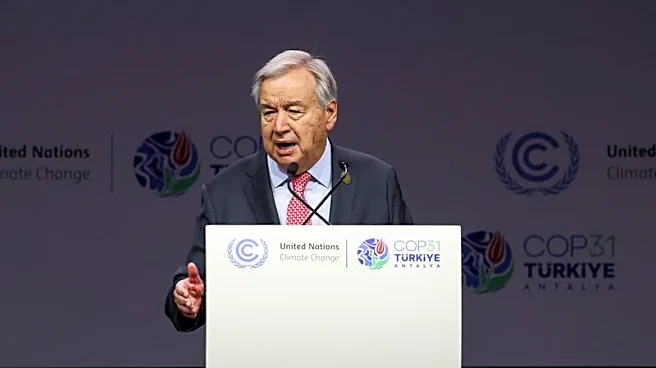
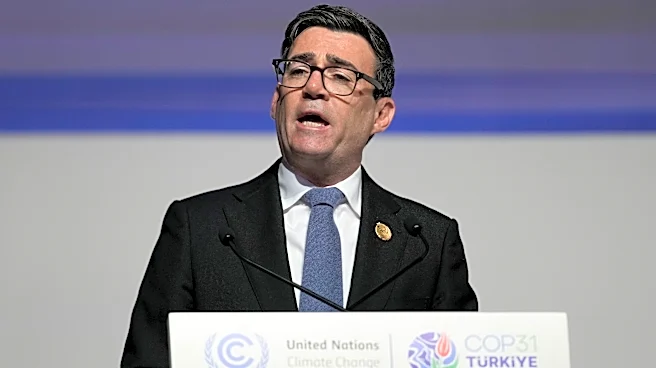
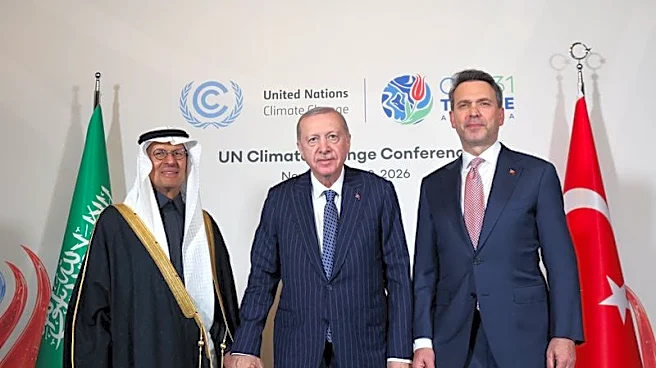
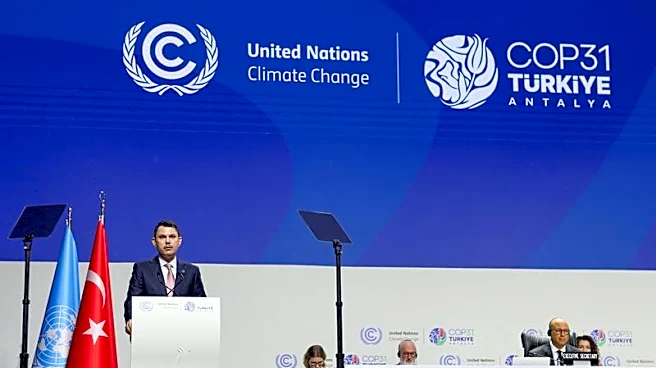
The COP31 Leaders' Summit is currently underway in Antalya, Turkey, bringing together nations to discuss and commit to climate action. The summit emphasizes the critical need to translate climate commitments into tangible actions, with leaders highlighting
the urgency of addressing climate change through practical solutions, increased climate finance, and adaptation measures. A key focus is on unlocking investment in clean energy technologies, accelerating electrification, and enhancing ocean action. Despite the ambitious goals, the absence of top leaders from some of the world's largest polluting nations has raised concerns about the potential impact and outcomes of the summit. Australia, represented by Prime Minister Anthony Albanese, is playing a leading role, advocating for urgent action, particularly for vulnerable Pacific island nations facing direct threats from rising sea levels. The summit aims to achieve concrete results through international cooperation.
Why It's Important?
This summit is crucial for the United States and the global community as it seeks to accelerate the transition to a clean energy economy and mitigate the impacts of climate change. The discussions on climate finance are particularly important, as they aim to provide necessary capital to vulnerable countries for adaptation and resilience. For U.S. industries, the focus on clean energy technologies and electrification could spur innovation and investment, creating new economic opportunities. However, the lack of full participation from major polluting nations could hinder the collective effort, potentially leading to an uneven playing field in global climate action and trade. The outcomes of COP31 will influence international climate policy, potentially impacting U.S. regulatory frameworks, trade agreements, and the competitiveness of its industries in the global green economy.
What's Next?
The COP31 summit will continue with negotiations and discussions aimed at solidifying commitments and outlining concrete steps for climate action. Participants will work towards agreements on increasing climate finance, particularly for developing nations, and establishing mechanisms for implementing clean energy initiatives. Following the summit, nations are expected to integrate these agreements into their national policies and strategies. The Climate Center, along with a delegation of California leaders, is attending to learn from global advancements and showcase California's state-level climate efforts, indicating a potential for U.S. states to adopt or adapt successful international strategies. The ongoing challenge will be to ensure that the commitments made at COP31 are followed by robust implementation, especially given the current trajectory of global warming exceeding the 1.5-degree target.
Beyond the Headlines
The COP31 summit underscores a deeper global challenge: the tension between national economic interests and the collective imperative of climate action. The absence of key leaders from major polluting nations highlights the ongoing struggle to achieve universal commitment and equitable burden-sharing in addressing climate change. This situation could lead to a two-tiered approach, where some nations aggressively pursue climate goals while others lag, potentially creating economic disparities and geopolitical friction. Furthermore, the emphasis on early warning systems and protection against climate-related disasters points to a growing recognition of the need for proactive adaptation strategies, not just mitigation. This shift reflects a broader understanding that climate change is not just an environmental issue but a fundamental threat to human security, economic stability, and social equity, demanding integrated and holistic solutions.