









What's Happening?
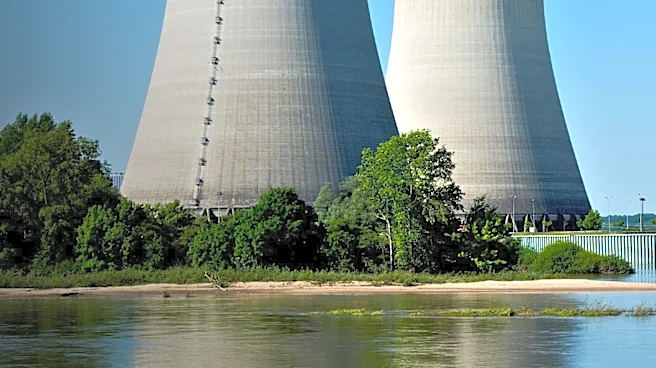
Hungary's Paks Nuclear Power Plant is set to resume electricity production after a temporary shutdown due to low water levels in the Danube River. The plant, which relies on the river for cooling, was forced to halt operations as the water levels reached
their lowest in nearly 90 years. Recent rainfall in Austria has led to a rise in the Danube's water levels, allowing Hungary to restart one of the plant's turbines. The shutdown marked the first time in 44 years that the plant had to cease operations due to environmental conditions. Despite the resumption, Hungary continues to urge voluntary reductions in electricity consumption amid ongoing heatwaves.
Why It's Important?
The resumption of operations at Hungary's Paks Nuclear Power Plant underscores the critical role of environmental conditions in energy production. The reliance on river water for cooling highlights the vulnerability of nuclear power plants to climate-related changes, such as droughts and heatwaves. This incident serves as a reminder of the need for robust contingency plans and alternative cooling methods to ensure energy security. The situation also emphasizes the importance of international cooperation in managing shared water resources, as changes in one region can have significant impacts on neighboring countries. The event may prompt discussions on the sustainability and resilience of nuclear energy in the face of climate change.
What's Next?
As Hungary resumes operations at the Paks plant, attention will turn to monitoring the Danube's water levels and the potential for future disruptions. The government may explore long-term solutions to mitigate the impact of environmental changes on energy production, such as investing in alternative cooling technologies or diversifying energy sources. Additionally, the situation could lead to increased collaboration with neighboring countries to manage water resources more effectively. The ongoing heatwave in Europe may also prompt further calls for energy conservation and efficiency measures to reduce demand and ensure stability in the power grid.