







What's Happening?
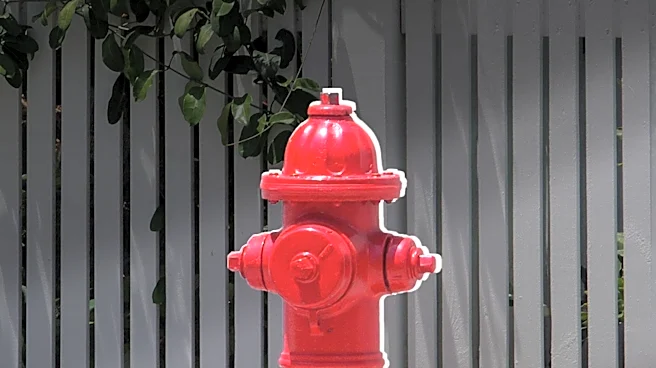
A recent massive fire in Baltimore at the corner of Appleton and Presbury streets has brought to light serious concerns regarding the functionality of fire hydrants in the city. Baltimore City Councilmember Odette Ramos, D-District 14, has flagged the issue,
stating that non-working hydrants pose a major safety risk. During the Wednesday fire, firefighters encountered significant difficulties accessing water, with dispatch recordings indicating that one hydrant was either 'dead' or had 'real low pressure,' forcing crews to reposition to another hydrant. Neighbors also reported issues with a hydrant at Appleton and Westwood streets. On Friday morning, City Department of Public Works (DPW) crews were observed checking hydrants in the area. DPW maintains thousands of hydrants across Baltimore City and County and recently reported approximately 100 hydrants are in need of repair.
Why It's Important?
The issue of broken fire hydrants in Baltimore carries critical implications for public safety and emergency response. Functional fire hydrants are essential for firefighters to quickly and effectively combat blazes, and any delay in accessing water can have severe consequences, potentially leading to greater property damage, increased risk of injury, or even loss of life. Councilmember Ramos emphasized that 'even hesitating one second could mean the difference between a completely destroyed property' or 'a life saved or a life lost.' This situation highlights potential systemic issues within the city's infrastructure maintenance, raising questions about the adequacy of funding, staffing, and oversight for critical public services. The reported backlog of 100 hydrants needing repair suggests a broader problem that could affect multiple neighborhoods, putting residents and properties at risk across the city.
What's Next?
Following Councilmember Ramos's public statements and the recent fire, increased scrutiny and pressure are expected on the Baltimore City Department of Public Works (DPW) to address the backlog of broken fire hydrants. Ramos has indicated she will monitor the repair efforts closely. This could lead to a more expedited repair schedule for the approximately 100 hydrants currently in need of service. Additionally, there may be calls for a comprehensive audit of the city's fire hydrant infrastructure and maintenance protocols to prevent future failures. Public advocacy groups and residents may also become more vocal, demanding accountability and transparency from city officials regarding the state of essential public safety equipment. The incident could also prompt discussions about increased budget allocations for infrastructure maintenance within the city.
Beyond the Headlines
The problem of non-functional fire hydrants in Baltimore points to a deeper issue of urban infrastructure decay and the challenges faced by many older American cities in maintaining essential services. Beyond the immediate safety concerns, this situation can erode public trust in municipal governance and emergency preparedness. It raises questions about long-term investment in public works and the prioritization of infrastructure maintenance against other city needs. The incident also underscores the critical, often unseen, role of basic urban infrastructure in daily life and emergency situations. A lack of reliable infrastructure can disproportionately affect vulnerable communities, exacerbating existing inequalities. Addressing this issue effectively requires not just repairs, but a strategic, long-term plan for infrastructure investment, preventative maintenance, and transparent communication with the public about the state of critical city assets.