






What's Happening?
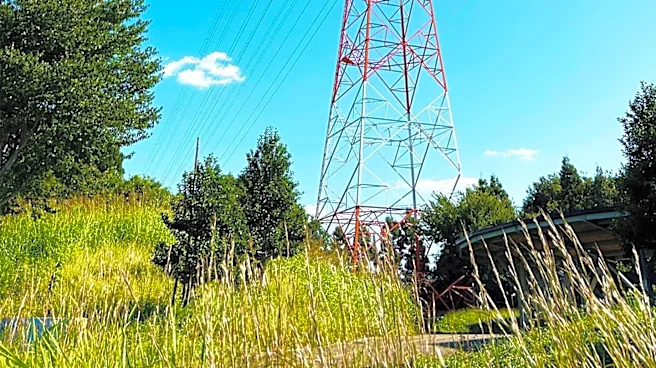
The North Carolina Utilities Commission has approved the expedited construction of a 1.31-mile, 230-kilovolt transmission line in Johnston County. This fast-tracking is intended to power Vulcan Elements, a North Carolina-based company establishing a $920
million rare-earth magnet factory. The plant, expected to employ up to 1,000 workers, will produce magnets crucial for various high-tech applications, including drones, submarines, aircraft, satellites, and electric vehicles. Vulcan Elements' Chief Operating Officer, Jake Bowles, emphasized the project's criticality, leading regulators to waive standard publication and hearing requirements under state law, citing an urgent need for electric service. The company invoked the federal Defense Production Act to meet its accelerated timeline, which regulators deemed justified. The electric cooperative, South River Electric Membership Corp., estimates the project cost at approximately $7.25 million, which Vulcan Elements has agreed to cover. Construction of the power line is anticipated to conclude by the end of March.
Why It's Important?
This development is a significant step in the broader federal initiative to bolster U.S. production of rare-earth magnets and decrease reliance on Chinese suppliers. The federal government has invested hundreds of millions of dollars into Vulcan Elements, underscoring the national security and economic resilience implications. Republican U.S. Sen. Ted Budd highlighted the necessity of decoupling from China, noting that rare-earths are vital components in military munitions, aircraft, and civilian technology. The factory's operation will contribute to a more secure domestic supply chain for these critical materials, reducing vulnerability to geopolitical supply constraints. Furthermore, the project is expected to have a substantial economic impact on North Carolina, with state and local incentives totaling up to $120.2 million. The expansion is projected to boost the state's economy by $2.6 billion, creating up to 1,000 jobs with an average annual salary of about $81,900, significantly above the average for Johnston County.
What's Next?
Construction of the 1.31-mile transmission line is expected to be completed by the end of March. Following the power line's completion, Vulcan Elements will proceed with the full operationalization of its $920 million rare-earth magnet factory in Benson, North Carolina. The company is on an accelerated production schedule, aiming to meet the urgent national demand for rare-earth magnets. South River Electric Membership Corp. is simultaneously designing the line, securing necessary rights-of-way and easements, and ordering equipment to adhere to the expedited timeline. Vulcan Elements plans to add up to 1,000 employees by the end of 2029, contingent on meeting hiring targets tied to state incentive packages. The federal government and various stakeholders will closely monitor the progress of this facility as it plays a crucial role in strengthening the U.S. supply chain for critical materials and reducing foreign dependency.
Beyond the Headlines
The expedited approval for Vulcan Elements' power line highlights the increasing prioritization of national security and supply chain independence in U.S. policy. The invocation of the Defense Production Act and the waiver of standard regulatory procedures underscore the perceived urgency of establishing domestic rare-earth magnet production capabilities. This move reflects a strategic shift away from globalized supply chains, particularly those dominated by geopolitical rivals, towards greater self-sufficiency in critical technologies. The project also raises questions about the balance between environmental and regulatory processes and national security imperatives, as standard procedures were bypassed for rapid development. The long-term implications could include a re-evaluation of regulatory frameworks for projects deemed vital for national defense, potentially setting precedents for future infrastructure developments in critical sectors. This initiative is part of a broader effort to re-industrialize certain strategic manufacturing capabilities within the U.S., fostering economic resilience and technological leadership.