









What's Happening?
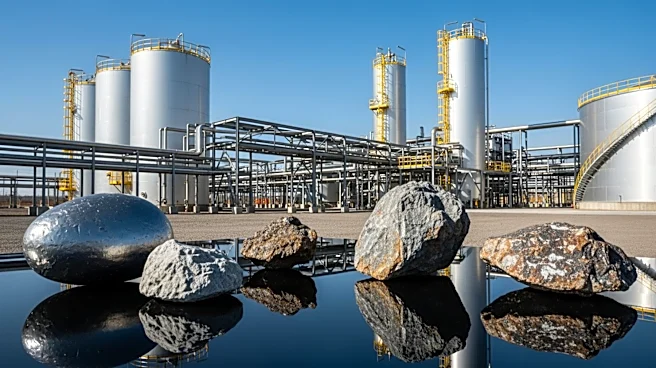
Madagascan mining company Ambatovy has announced the resumption of its nickel production following a disruption caused by a cyclone in February. The company plans to produce 2,500 metric tons of nickel in June. Additionally, Ambatovy expects to produce around
250 tons of cobalt this month. The company restarted one of its acid plants on May 23 and aims to have the second plant operational by the end of June. The recovery and rebuilding efforts were financially supported by Korea Mine Rehabilitation and Mineral Resources Corporation (KOMIR) and a group of investors who acquired a 54% stake from Japanese trading house Sumitomo in May. Prior to the cyclone, Ambatovy's production levels were approximately 29,000 tons of nickel and 2,700 tons of cobalt in 2025.
Why It's Important?
The resumption of production at Ambatovy is significant for the global nickel and cobalt markets, as these metals are crucial for various industries, including the production of batteries for electric vehicles. The disruption caused by the cyclone had potential implications for supply chains, particularly in sectors reliant on these materials. The financial backing from KOMIR and new investors highlights the strategic importance of Ambatovy's operations. The recovery of production capabilities not only stabilizes the company's output but also contributes to the broader supply of nickel and cobalt, which are essential for technological and industrial applications. This development may also influence market prices and availability of these metals, impacting manufacturers and consumers worldwide.
What's Next?
Ambatovy's focus will likely be on stabilizing and increasing its production levels to meet market demands. The successful restart of the second acid plant by the end of June will be crucial for achieving full operational capacity. Stakeholders, including investors and industry partners, will be monitoring the company's progress closely. The broader market will also be attentive to any further disruptions or developments that could affect supply chains. Additionally, the company's ability to maintain production levels amidst potential future environmental challenges will be a key area of interest.