





What's Happening?
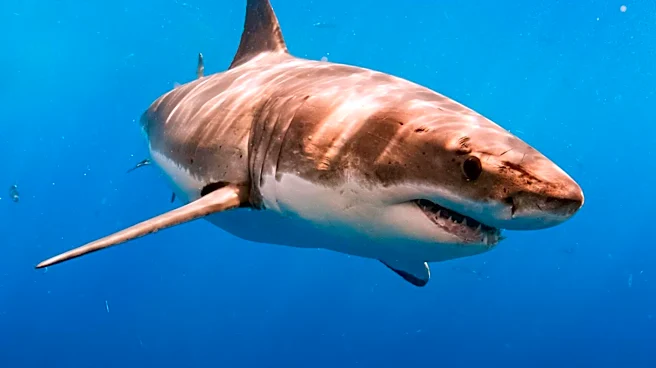
A kayak fisherman in California, David Slavich, recently had a close encounter with a great white shark off the coast of Half Moon Bay, capturing the entire incident on video. Slavich reported hearing a splash behind him and turning to see a massive shark just
feet from his kayak. He described the shark as larger than his 12.5-foot kayak, causing immediate panic. Prior to the encounter, a paddleboarder had warned Slavich about a shark in the area, but he dismissed the likelihood of encountering it. The video shows Slavich quickly reeling in his line as the shark approached, with its eye locking with his. The shark swam past his kayak without making contact, continuing on its way. Slavich, who spends considerable time in the water, views the incident as evidence that sharks are more curious than aggressive towards humans, despite the intense fear he experienced.
Why It's Important?
This incident highlights the increasing interactions between humans and marine wildlife, particularly in coastal areas popular for recreational activities like kayak fishing. While Slavich's encounter ended without harm, it underscores the inherent risks involved in venturing into marine environments where large predators reside. The video serves as a powerful reminder for kayakers and other water enthusiasts to remain vigilant and aware of their surroundings. It also contributes to the ongoing discussion about shark behavior and human perception of these animals, potentially influencing public safety guidelines and educational efforts regarding marine wildlife interactions. For the kayak fishing community, it emphasizes the importance of safety precautions and the potential for unexpected wildlife encounters.
What's Next?
Following this encounter, Slavich has stated he will no longer kayak solo and plans to always go with a buddy, emphasizing increased safety measures. This personal decision may influence other solo kayakers to adopt similar precautions. Marine biologists and conservation societies may use such documented encounters to further study shark behavior and refine advice for water users on how to react during a shark sighting. The video could also be used in public awareness campaigns to educate individuals about safe practices in shark habitats, potentially leading to updated recommendations for kayakers, such as avoiding solo trips and being prepared for unexpected wildlife interactions. Discussions around the rarity of shark attacks on kayakers versus the perceived threat may also continue.
Beyond the Headlines
The encounter raises deeper questions about the coexistence of humans and apex predators in shared environments. While terrifying for the individual, such events offer valuable, unfiltered insights into wildlife behavior that can inform conservation strategies and human safety protocols. The incident also touches upon the psychological impact of such close calls, reinforcing primal fears while simultaneously offering a chance to re-evaluate preconceived notions about dangerous animals. Ethically, it prompts consideration of how human recreational activities might impact marine ecosystems and the creatures within them, and whether increased human presence in these habitats necessitates greater responsibility and understanding from our end. The footage itself becomes a tool for both education and a testament to the wildness that still exists in our world.