







What's Happening?
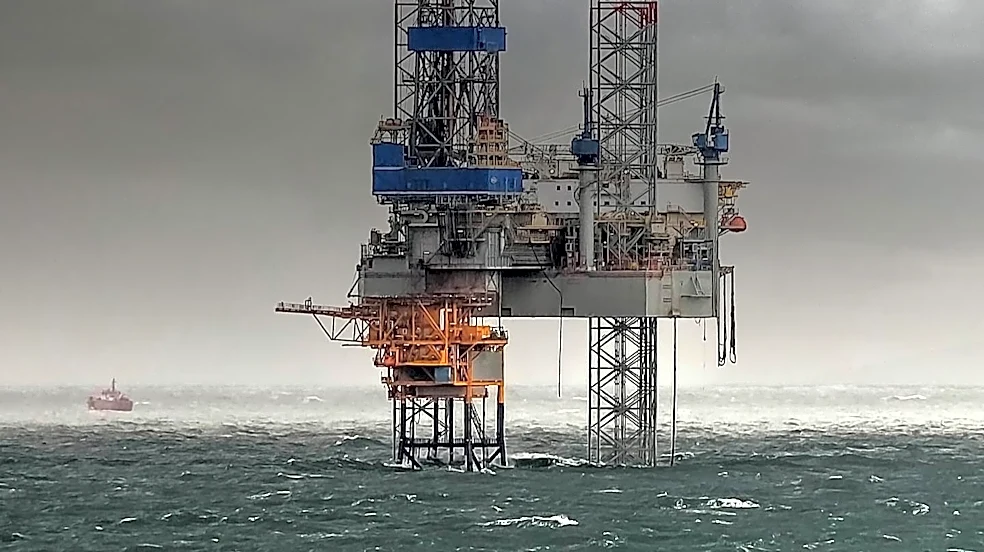
ConocoPhillips has submitted an application to the Norwegian Environment Agency (Miljødirektoratet) for permission to discharge old well fluids. This request is in connection with plugging operations at the Ekofisk field. The company has assessed that
these old well fluids possess environmental properties corresponding to substances categorized as yellow subcategory 1, yellow without subcategory, and green category. ConocoPhillips is seeking authorization to discharge a total of 2.3 tons of these substances, distributed across the mentioned categories. The application and other relevant documents are available for public review on the agency's website, with a deadline for statements set for November 17, 2026.
Why It's Important?
This application by ConocoPhillips is significant as it pertains to environmental regulations and the responsible decommissioning of oil and gas infrastructure. The Ekofisk field, a mature North Sea asset, requires careful management during plugging operations to minimize environmental impact. The categorization of the well fluids (yellow subcategory 1, yellow without subcategory, and green category) indicates varying levels of environmental risk, with green typically representing the lowest risk. The Norwegian Environment Agency's review process ensures that such discharges comply with national and international environmental standards, protecting marine ecosystems. The public hearing period allows stakeholders, including environmental organizations and local communities, to provide input, ensuring transparency and accountability in industrial operations. The outcome of this permit application will set a precedent for future decommissioning activities in the region and reflects the ongoing balance between energy production and environmental stewardship.
What's Next?
The Norwegian Environment Agency will review ConocoPhillips' application and all submitted statements from the public and other stakeholders by the November 17, 2026 deadline. Following this period, the agency will make a decision on whether to grant the permit for the discharge of old well fluids. The decision will be based on environmental impact assessments, compliance with regulatory frameworks, and consideration of public input. If approved, the permit will outline specific conditions and monitoring requirements for the discharge. If denied or if significant concerns are raised, ConocoPhillips may need to revise its plans or explore alternative methods for managing the well fluids. The final decision and the permit, if issued, will be made publicly available through the agency's post journal and the Norwegian emissions database.
Beyond the Headlines
The request for a discharge permit for old well fluids highlights the complex environmental challenges associated with the lifecycle of offshore oil and gas fields. As fields like Ekofisk mature and reach the end of their operational life, decommissioning becomes a critical phase that requires careful planning and adherence to stringent environmental protocols. The management of legacy materials, such as well fluids, involves assessing their chemical composition, potential toxicity, and dispersion characteristics in the marine environment. This process often involves trade-offs between cost-effectiveness and environmental protection. The public consultation aspect of the permit application underscores the increasing demand for transparency and stakeholder engagement in industrial activities that could impact the environment. This case reflects a broader trend in the energy industry towards more rigorous environmental scrutiny and the need for companies to demonstrate robust environmental management practices throughout their operations, from exploration to decommissioning.