


What's Happening?
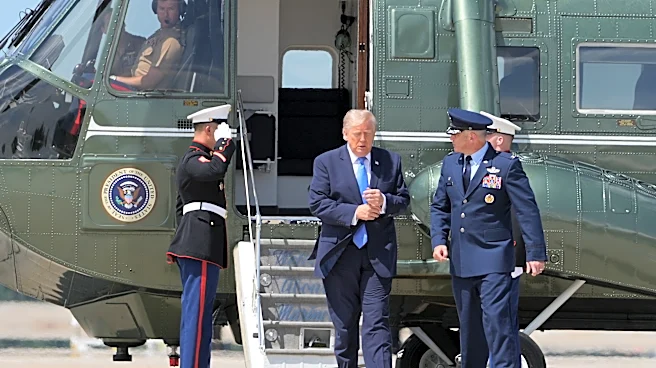
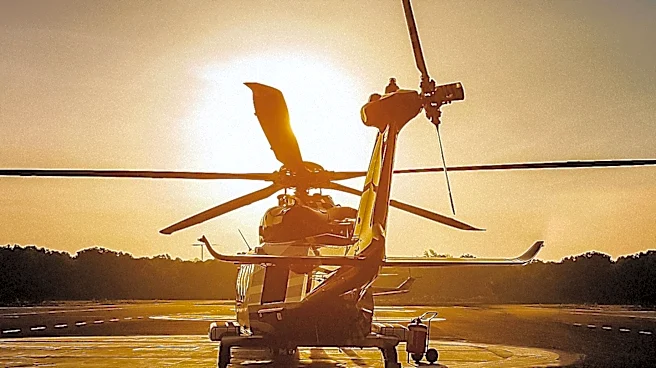
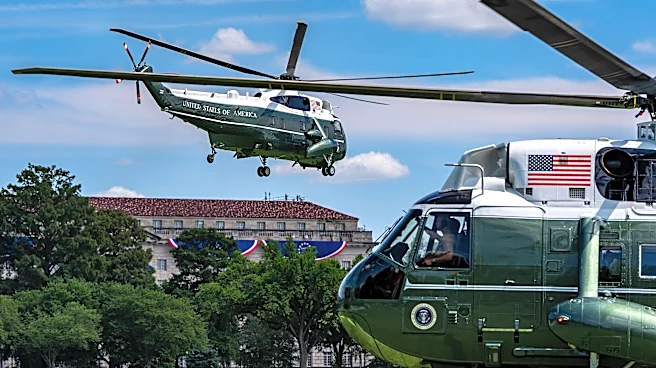
The Federal Aviation Administration (FAA) and the National Transportation Safety Board are investigating an incident where President Trump's military helicopter, Marine One, briefly flew too close to a passenger jet at Washington's Reagan National Airport.
The FAA's preliminary review indicated a 'momentary loss of separation' between the aircraft, which then moved away from each other. The incident occurred as Marine One was departing for Joint Base Andrews, with President Trump on board, en route to Los Angeles. Air traffic controllers reportedly failed to pause commercial flights during Marine One's departure, a protocol established after a fatal collision in January 2025. The passenger jet involved was Envoy Air flight 3742, operated on behalf of American Airlines, bound for Pensacola, Florida. Both aircraft landed safely, and the FAA confirmed that an air traffic controller maintained contact with both pilots throughout the incident.
Why It's Important?
This incident highlights ongoing concerns about air traffic safety protocols at Reagan National Airport, especially following a previous fatal collision involving a military helicopter and a commercial jet. The near-miss underscores the critical need for strict adherence to safety protocols, particularly when high-profile flights like Marine One are involved. The investigation could lead to further revisions of air traffic control procedures to prevent similar incidents. The safety of air travel is paramount, and any lapses can have significant implications for public confidence in aviation safety standards. Additionally, the incident draws attention to the challenges of managing airspace in busy metropolitan areas, where military and commercial flights frequently intersect.
What's Next?
The FAA and the National Transportation Safety Board will continue their investigations to determine the cause of the incident and assess whether current protocols are sufficient. Depending on the findings, there may be recommendations for changes in air traffic control procedures at Reagan National and potentially other airports. Stakeholders, including airlines and government agencies, will likely review and possibly update their operational guidelines to enhance safety. The outcome of these investigations could influence future policy decisions regarding airspace management and the integration of military and commercial flight operations.