

What's Happening?
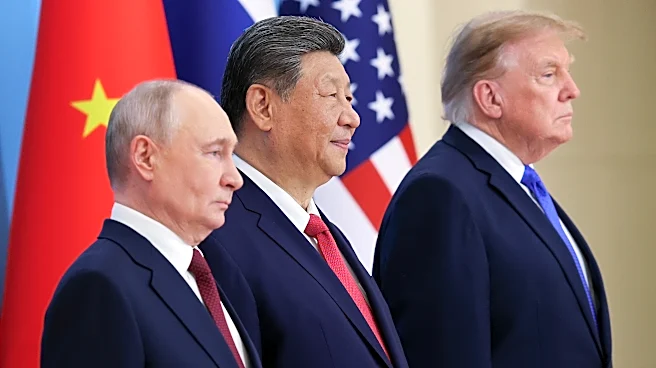
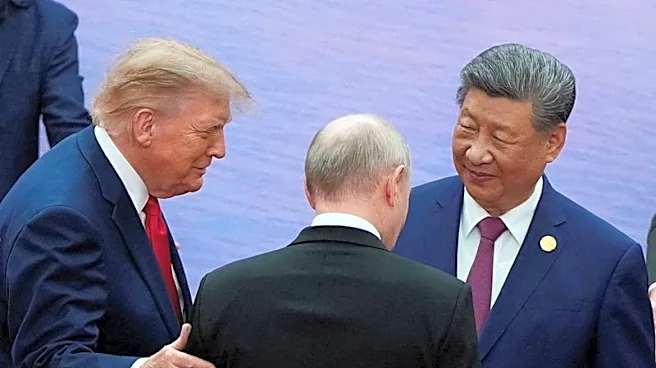
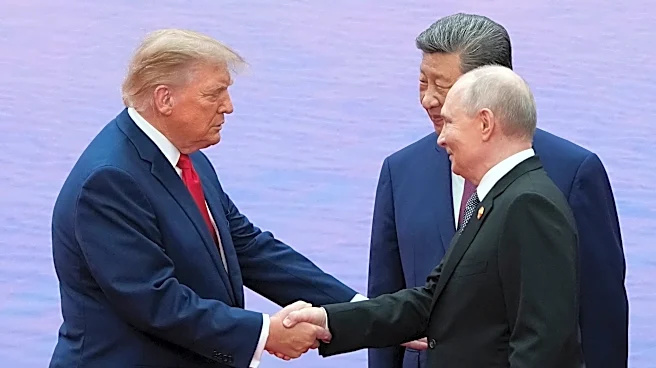
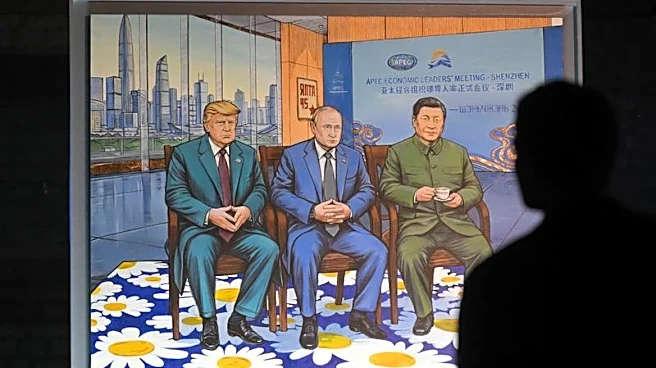
Russian President Vladimir Putin stated that Russia, China, and the United States possess the capability to significantly contribute to strengthening global stability through constructive cooperation. Speaking at a trilateral meeting with the leaders
of China and the US, President Putin expressed his conviction that these three nations, if they act as partners based on mutual respect, equality, and a balance of interests, can enhance global security. This statement comes amidst ongoing geopolitical tensions and varying international relations between the three powers. The Russian leader's remarks underscore a call for a collaborative approach to global challenges, suggesting that despite existing disagreements, there is potential for these major players to work together for broader international benefit. The context of this statement is a high-level diplomatic engagement aimed at fostering dialogue among the world's leading nations.
Why It's Important?
President Putin's emphasis on constructive cooperation among Russia, China, and the US is significant because it highlights a potential pathway for de-escalation and stability in a complex global environment. Given the current geopolitical landscape, marked by conflicts, economic rivalries, and differing political ideologies, any call for collaboration from a major world leader carries weight. Such cooperation, if realized, could have profound implications for international security, arms control, trade relations, and the resolution of regional conflicts. It suggests a recognition that despite individual national interests, there are overarching global challenges that require a concerted effort from these powerful states. The statement also implicitly acknowledges the immense influence these three countries wield and the responsibility that comes with it, potentially setting a tone for future diplomatic engagements and multilateral initiatives.
What's Next?
Following President Putin's statement, the immediate next steps will involve observing how this call for constructive cooperation translates into concrete actions and diplomatic initiatives. The leaders of the United States and China will likely respond to this sentiment through their own statements and policy decisions. Future trilateral or bilateral meetings could further explore areas of potential collaboration, particularly on issues of global security and stability. The international community will be watching to see if this expressed willingness to cooperate leads to tangible progress in addressing pressing global issues, such as nuclear non-proliferation, climate change, or regional conflicts. The challenge will be to bridge existing differences and build trust to move from rhetoric to effective joint action, which will require sustained diplomatic efforts and a genuine commitment from all parties.
Beyond the Headlines
President Putin's statement goes beyond a simple diplomatic overture; it touches upon the fundamental architecture of global power and governance. In an era often characterized by competition and confrontation, a call for constructive cooperation from a leader like Putin suggests a potential recognition of shared vulnerabilities and interconnectedness. This could signal a long-term strategic shift towards a more multipolar world order where collaboration, rather than unilateralism, becomes a more viable path for addressing complex global problems. However, the practical implementation of such cooperation remains a significant challenge, given the deep-seated historical grievances, ideological differences, and competing national interests among these three powers. The statement also implicitly challenges the notion of a single dominant global power, advocating instead for a balanced partnership that respects the interests of all major players, potentially reshaping future international relations and alliances.