










What's Happening?
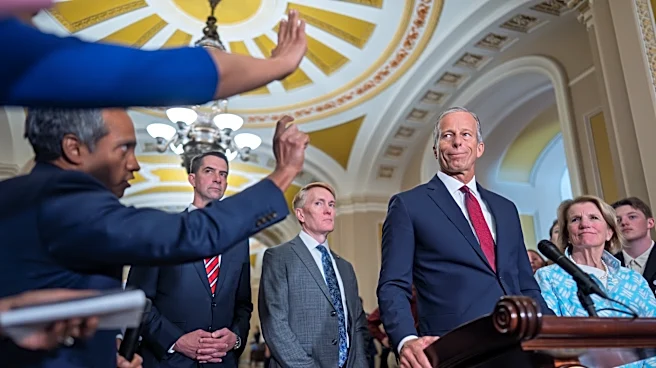
A bipartisan housing bill, the 21st Century ROAD to Housing Act, passed Congress with significant support, aiming to address the U.S. housing shortage and rising costs. However, five Senate Republicans, including Senator Rand Paul, voted against it, citing
concerns over property rights and market distortions. The bill, which passed with a 358-32 vote in the House and 85-5 in the Senate, seeks to increase housing supply, curb investor activity, and expand access to housing finance. Despite its passage, President Trump has delayed signing the bill, demanding Congress first pass the SAVE America Act, a voting measure he deems a 'national emergency.'
Why It's Important?
The housing reform bill is a critical response to the ongoing housing crisis in the U.S., which has been exacerbated by years of underbuilding and rising construction costs. The legislation's focus on increasing supply and limiting large investors' market share is seen as a necessary step to make housing more affordable. However, the opposition from some Republicans highlights a significant divide over federal intervention in the housing market. The bill's passage reflects a rare bipartisan agreement on the need to address housing issues, but the delay in signing due to political maneuvering underscores the complexities of legislative priorities.
What's Next?
The bill now awaits President Trump's signature, which is contingent on the passage of the SAVE America Act. This linkage of housing reform to election legislation could delay the implementation of measures designed to alleviate the housing crisis. The ongoing debate within the Republican Party over the role of federal intervention in housing and election integrity legislation suggests further political negotiations are likely. The outcome will significantly impact millions of homebuyers, renters, and local governments, as well as the broader housing market.