


What's Happening?
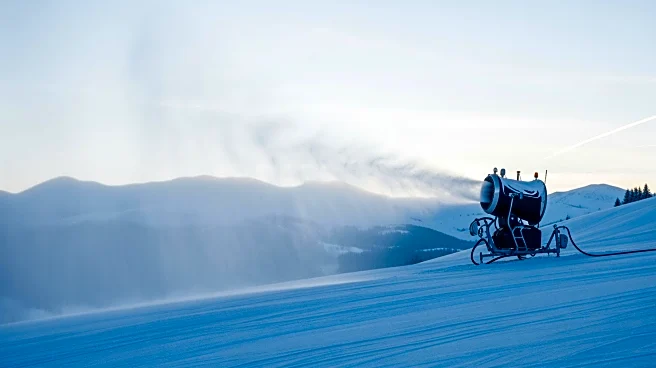
Big Sky Resort in Montana is employing advanced snowmaking and grooming technologies to address the challenges posed by warmer winters and less reliable snowfall. The resort has experienced higher-than-average temperatures and lighter-than-average snowfall,
particularly at lower altitudes, which has affected the consistency of ski conditions. To counter these challenges, Big Sky has invested in technologies such as the iSno software, which monitors snowmaking systems in real time, optimizing water and energy usage. Additionally, LIDAR technology has been integrated into grooming machines to maintain consistent snow coverage and prevent bald patches. These efforts have allowed Big Sky to extend its ski season and maintain good skiing conditions despite the reduced natural snowfall.
Why It's Important?
The use of advanced technology at Big Sky Resort highlights the broader impact of climate change on the ski industry, which is increasingly facing unpredictable weather patterns and reduced snowfall. By investing in snowmaking and grooming technologies, ski resorts can mitigate some of the adverse effects of climate change, ensuring that they remain viable destinations for winter sports enthusiasts. This approach not only helps maintain the economic stability of ski resorts but also supports local economies that rely on tourism. As climate change continues to affect snowfall patterns, the ski industry may need to adopt similar technological solutions to remain competitive and attract visitors.
What's Next?
As Big Sky and other ski resorts continue to adapt to changing climate conditions, the industry may see a shift in visitor patterns, with skiers and snowboarders becoming more strategic in their travel plans. The use of flexible ski passes, such as the Epic and Ikon passes, may become more popular, allowing winter sports enthusiasts to choose destinations with the best snow conditions. Additionally, resorts may need to continue investing in technology to enhance snowmaking and grooming capabilities, ensuring they can offer reliable skiing conditions even in warmer winters. This trend could lead to increased competition among resorts to provide the best possible experience for visitors.
Beyond the Headlines
The reliance on technology to combat the effects of climate change in the ski industry raises questions about sustainability and environmental impact. While snowmaking and grooming technologies can help maintain ski conditions, they also require significant water and energy resources. Resorts must balance the need to provide a quality skiing experience with the responsibility to minimize their environmental footprint. This challenge may drive innovation in more sustainable snowmaking practices and encourage resorts to explore alternative solutions to reduce their reliance on artificial snow.