


What's Happening?
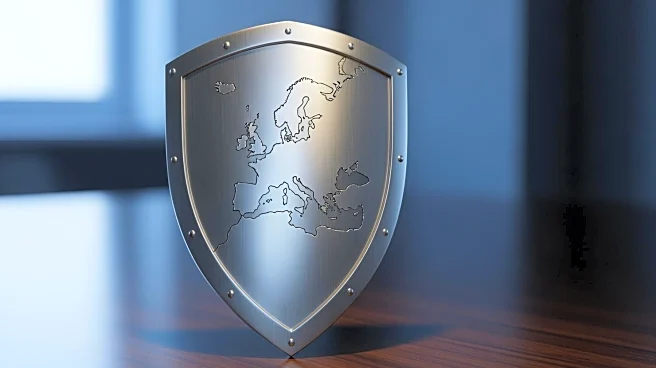
The European Union is considering the establishment of a standing military force of 100,000 troops to address security challenges posed by Russia's ongoing invasion of Ukraine. This proposal, discussed at the World Economic Forum in Davos, is part of a broader
debate on whether Europe should form its own army. Andrius Kubilius, the EU Commissioner for Defense and Space, emphasized the need for Europe to 'fight as Europe' rather than relying solely on NATO. The idea of a European army has been revisited due to increased tensions with Russia and the perceived need for a more integrated defense strategy. However, the proposal faces opposition from some EU leaders, such as Kaja Kallas, who argue that a separate European army could be 'extremely dangerous' and impractical given existing NATO commitments.
Why It's Important?
The discussion around a European army highlights the EU's strategic dilemma in balancing its defense needs with its commitments to NATO. The proposal reflects growing concerns about Europe's security autonomy, especially in light of strained transatlantic relations and the ongoing conflict in Ukraine. A unified European military force could potentially streamline defense spending and reduce redundancies across national armies, enhancing the EU's collective defense capabilities. However, it also raises questions about sovereignty, decision-making, and the integration of diverse military systems. The outcome of this debate could significantly impact the EU's defense policy and its role on the global stage.
What's Next?
The EU will likely continue to explore the feasibility of a European army, with further discussions expected among member states. Key issues to address include the integration of command structures, decision-making processes, and the relationship with NATO. The proposal's progress will depend on political will and the ability to reconcile differing national interests. Additionally, public opinion across Europe, which has shown increasing support for deeper defense integration, may influence the direction of these discussions. The EU's approach to defense will also be shaped by ongoing geopolitical developments, particularly the situation in Ukraine and relations with the United States.