






What's Happening?
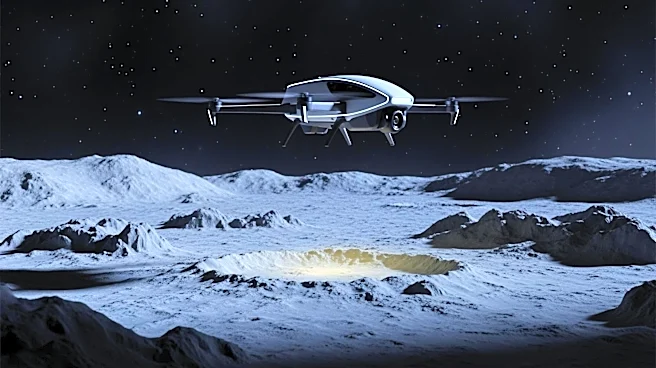
NASA has announced an ambitious plan to deploy a fleet of drones, known as MoonFall, to scout the lunar south pole. This initiative is part of a broader overhaul of NASA's Artemis Program, aimed at preparing for future lunar surface operations by 2028.
The MoonFall project, led by Ray Baker at NASA's Jet Propulsion Laboratory, involves deploying four drones equipped with cameras and sensors to cover a range of approximately 30 miles each. These drones will gather detailed imagery and data to assist in selecting future landing sites for Artemis missions and establishing a lunar base. The project draws on the success of the Ingenuity Mars helicopter, utilizing similar technology and industry partnerships to achieve its goals.
Why It's Important?
The MoonFall project represents a significant step forward in NASA's efforts to return humans to the moon and establish a sustainable presence there. By leveraging advanced drone technology and industry collaboration, NASA aims to reduce costs and increase the efficiency of lunar exploration. The data collected by the drones will be crucial for planning future missions and ensuring the safety and success of astronauts on the lunar surface. This initiative also highlights NASA's commitment to innovation and its ability to adapt and utilize emerging technologies to achieve its objectives.
What's Next?
NASA is moving quickly to implement the MoonFall project, with plans to select industry partners by June 2026. Prototype hardware is already in development, and testing is scheduled for later this year. The integration and testing of the spacecraft are expected to occur by late summer 2027, with the launch of the MoonFall mission planned for 2028. As the project progresses, NASA will continue to refine its strategies and collaborate with industry partners to ensure the successful deployment and operation of the drones on the lunar surface.