

What's Happening?
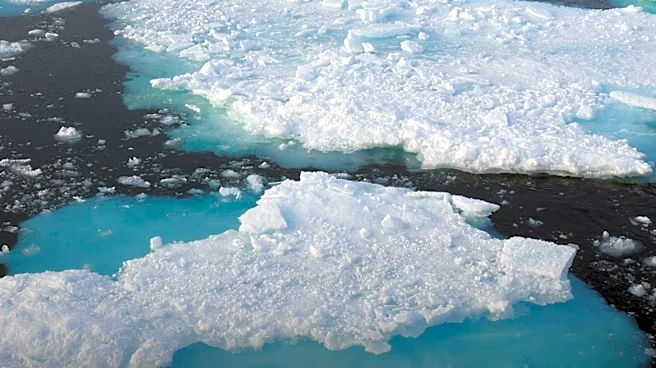
A new study published in the Proceedings of the National Academy of Sciences of the United States of America reveals that Antarctica is releasing mercury at an accelerated rate due to melting ice. Historically, Antarctica acted as a sink for airborne
and marine pollutants, trapping contaminants like mercury in its freezing temperatures. However, increasing anthropogenic mercury emissions and the melting of Antarctic glaciers are transforming the continent into an active source of mercury pollution. Researchers analyzed 16 sediment cores from the continental shelf off the Antarctic Peninsula, finding a 160% increase in mercury accumulation since industrialization, with a particularly rapid acceleration since the 1950s. Simulations indicate a 550% increase in mercury releases from Antarctic glaciers into the ocean since industrialization. Maodian Liu, an environmental scientist at Peking University and coauthor of the study, states that "Climate change acts as an amplifier of mercury cycling," highlighting the interconnectedness of global mercury pollution and climate change.
Why It's Important?
The accelerated release of mercury from Antarctica has significant implications for global ecosystems and potentially for human health, including in the U.S. Methylmercury, a more toxic form of mercury, readily accumulates in the Antarctic food web, affecting plankton, krill, fish, seabirds, and marine mammals. At high doses, methylmercury can impair neurological function, behavior, growth, and reproduction in animals. Given that some Antarctic krill and fish enter commercial fisheries, this mercury pollution has the potential to impact human health through the food chain. For the U.S., this means a potential increase in mercury levels in seafood imports, necessitating stricter monitoring and potentially affecting dietary recommendations. The study underscores that even remote regions are not immune to the effects of industrial pollution and climate change, emphasizing the need for global efforts to reduce mercury emissions and mitigate climate change to protect both environmental and public health.
What's Next?
The study suggests that even if new mercury emissions from human activities decrease, mercury stored in Antarctic ice will continue to be released as ice melts, meaning environmental mercury burdens are unlikely to decline immediately. Further research is needed to determine how much mercury in the cold waters of the Antarctic shelf transforms into methylmercury, as this process typically occurs faster in warmer temperatures. Researchers also aim to ascertain if the trends observed around the Antarctic Peninsula are representative of the entire continent. The findings highlight the urgency for continued global efforts to reduce anthropogenic mercury emissions and to address climate change. The U.S. and other nations will likely face ongoing challenges in managing mercury contamination in marine ecosystems and ensuring the safety of seafood supplies, potentially leading to increased research funding, international collaborations, and policy adjustments related to environmental protection and public health.
Beyond the Headlines
The transformation of Antarctica from a mercury sink to an active source due to climate change reveals a complex and concerning feedback loop. This phenomenon illustrates how seemingly distant environmental issues can have profound global consequences, challenging the notion that remote areas are pristine. The remobilization of legacy pollutants, trapped for decades or centuries, by melting ice is a stark reminder of the long-term impacts of industrialization. This situation raises ethical questions about intergenerational responsibility for environmental degradation and the global equity of pollution burdens. For the U.S., it underscores the interconnectedness of its environmental policies with global climate and pollution trends, suggesting that domestic efforts to reduce emissions must be complemented by international cooperation to address these pervasive challenges. The study also highlights the critical role of scientific research in uncovering these complex environmental dynamics and informing policy decisions.