







What's Happening?
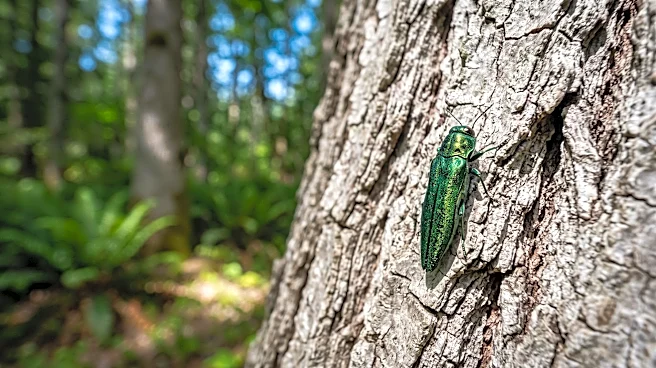
The emerald ash borer (EAB), a highly destructive invasive beetle, has been confirmed in Washington state. State officials detected the pest after two individuals reported spotting the insect on their windshield in Vancouver in early August. This marks
the first confirmed presence of EAB in Washington. Sven Spichiger, pest program manager at the Washington State Department of Agriculture, noted that the arrival of the EAB was anticipated. The metallic green beetle feeds on wood and has been responsible for the destruction of over 100 million ash trees across the United States since its initial detection two decades ago. All native ash species are vulnerable to infestation. Without effective management, municipalities could face a 90% to 100% loss of their ash trees within 10 to 12 years of an initial infestation, according to a Department of Natural Resources analysis. In response, the Department of Agriculture has initiated a firewood quarantine, prohibiting the transportation of untreated firewood within the state to help contain the spread.
Why It's Important?
The confirmation of the emerald ash borer in Washington state poses a significant ecological and economic threat. Ash trees are a common component of urban and natural forests, providing ecological benefits such as habitat and shade, and contributing to urban aesthetics and property values. The widespread loss of ash trees could lead to substantial costs for municipalities and homeowners related to tree removal, replacement, and ongoing management. Ecologically, the loss of ash trees can disrupt forest ecosystems, impacting biodiversity and the food web. The EAB's presence also highlights the ongoing challenge of managing invasive species, which can have far-reaching consequences for natural resources and agricultural sectors. The economic impact extends to industries reliant on ash wood, although this is less prominent in the U.S. compared to other regions. The situation underscores the importance of public vigilance and coordinated state-level responses to mitigate the damage from invasive pests.
What's Next?
Following the confirmation, Washington state officials are urging the public to remain vigilant and report any suspected sightings of the emerald ash borer to the Washington Invasive Species Council or through the Washington Invasives app. The state has already developed an Emerald Ash Borer Resource and Management Guide and an Urban Forest Pest Readiness Playbook to assist residents and local governments in detecting and responding to infestations. Forestry assistance for municipalities will be available through the Department of Natural Resources, contingent on funding. The firewood quarantine is a critical immediate step to slow the beetle's spread. Future actions will likely involve continued monitoring, public education campaigns, and potentially the implementation of biological controls or targeted pesticide treatments in affected areas. The state will also need to assess the effectiveness of current containment strategies and adapt its approach as the infestation evolves. The long-term goal is to minimize the ecological and economic impact of the EAB on Washington's ash tree populations.
Beyond the Headlines
The arrival of the emerald ash borer in Washington state is more than just an environmental issue; it reflects broader challenges in global trade and climate change that facilitate the spread of invasive species. The beetle, native to Asia, likely arrived in North America through wood packaging materials, demonstrating how interconnected global economies can inadvertently introduce ecological threats. The inability to eradicate the EAB once established, as noted by the Department of Agriculture, underscores the need for proactive prevention and early detection strategies. This situation also raises questions about the resilience of urban and natural ecosystems to novel threats and the long-term financial burden on local governments to manage such crises. The public's role in identifying and reporting invasive species is crucial, highlighting the importance of citizen science and community engagement in environmental protection. The ongoing battle against the EAB serves as a stark reminder of the delicate balance of ecosystems and the persistent vigilance required to protect them.