

What's Happening?
The European Union's plan to provide a €90 billion support loan to Ukraine has encountered a significant hurdle due to Hungary's veto. The loan, intended to assist Ukraine with its budget and defense needs amidst the ongoing conflict with Russia, was
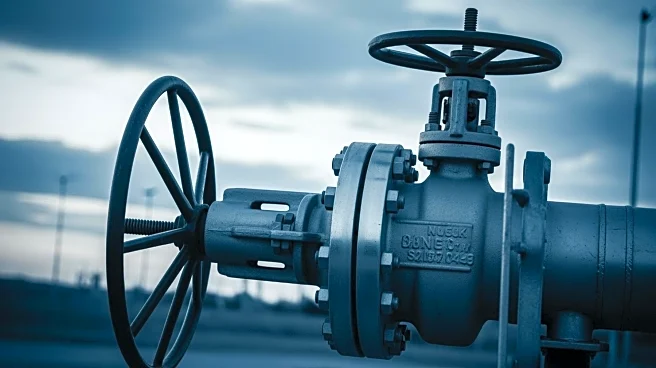
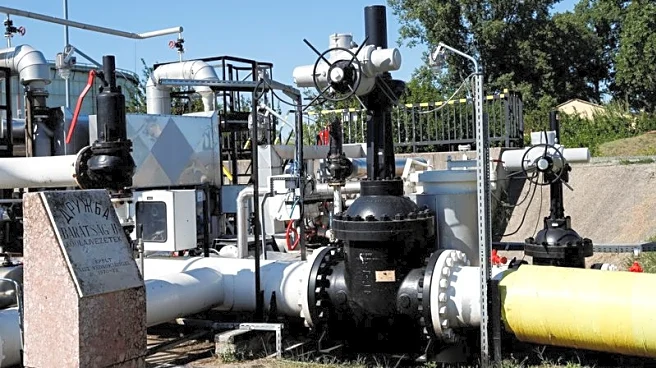
agreed upon by EU leaders in December. However, Hungary has blocked the loan and a new EU sanctions package against Moscow, citing a dispute over oil supplies. European Parliament President Roberta Metsola signed the loan on behalf of the parliament, but this action is only a preliminary step in the EU's legislative process and does not finalize the loan. The loan requires unanimous approval from all EU member states, and Hungary's veto remains a critical obstacle. The dispute centers around the Druzhba pipeline, which transports Russian oil to Hungary and Slovakia. Hungary claims that Ukraine is blocking the pipeline, while Ukraine asserts that the pipeline was damaged by Russian airstrikes.
Why It's Important?
The impasse over the EU's financial support to Ukraine highlights the complex geopolitical dynamics within Europe, particularly concerning energy dependencies and regional security. Hungary's veto underscores the challenges the EU faces in maintaining a unified stance against Russia while balancing individual member states' economic interests. The situation also reflects the broader implications of energy security in Europe, as Hungary's reliance on Russian oil through the Druzhba pipeline complicates its position. The EU's ability to provide financial aid to Ukraine is crucial for supporting the country's defense and public services during the conflict, and any delay or obstruction could impact Ukraine's resilience against Russian aggression. Additionally, the dispute may strain relations within the EU, as member states navigate the delicate balance between collective action and national interests.
What's Next?
The EU will need to engage in diplomatic negotiations to address Hungary's concerns and seek a resolution to the oil supply dispute. This may involve discussions on alternative energy sources or compensation mechanisms to mitigate Hungary's reliance on Russian oil. The European Commission and Council will likely continue to push for the loan's approval, emphasizing its importance for European security and solidarity with Ukraine. Meanwhile, Hungary may face pressure from other EU members to reconsider its position, especially if the pipeline dispute can be resolved. The outcome of these negotiations will be pivotal in determining the EU's ability to support Ukraine effectively and maintain cohesion among its member states.