
What's Happening?
Japan's Prime Minister Sanae Takaichi, leader of the ruling Liberal Democratic Party (LDP), secured a supermajority in the recent general election, allowing her to continue as the country's prime minister.
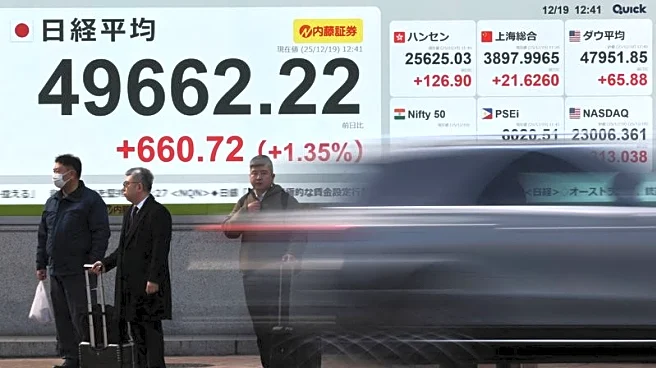
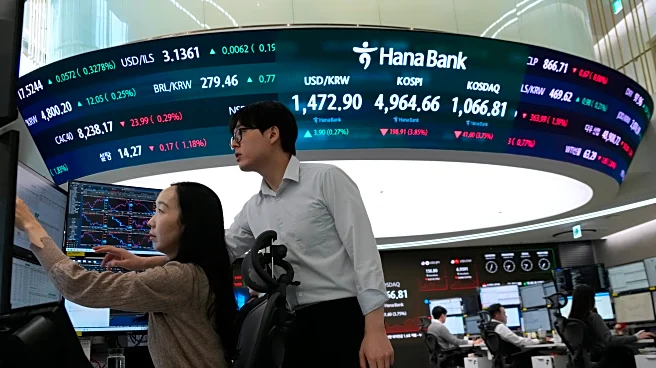
This victory has given Takaichi the mandate to pursue her agenda, which includes increased spending and the suspension of certain food-related taxes. Following the election results, Japanese stocks surged, with the Nikkei 225 reaching a record high. The yen also strengthened against the dollar, reflecting renewed investor confidence. This development coincides with a rebound in U.S. markets, where tech stocks led a significant rally, pushing major benchmarks like the Dow Jones Industrial Average above 50,000 for the first time.
Why It's Important?
Takaichi's victory and the subsequent market rally highlight the interconnectedness of global economies and the impact of political stability on investor confidence. The election results in Japan have not only bolstered the Nikkei 225 but have also contributed to a positive sentiment in U.S. markets, particularly in the tech sector. This development underscores the importance of political leadership in shaping economic policies that can drive market performance. The rally in tech stocks, driven by optimism around AI investments, suggests a potential shift in market dynamics that could influence global economic trends.
What's Next?
With a strong mandate, Prime Minister Takaichi is expected to implement her policy agenda, which could further influence Japan's economic landscape. Investors will likely monitor her administration's actions closely, particularly regarding fiscal policies and international trade relations. In the U.S., the tech sector's performance will be a focal point, as companies continue to navigate the evolving landscape of AI and technology investments. The interplay between political decisions and market reactions will remain a critical area of interest for stakeholders globally.