






What's Happening?
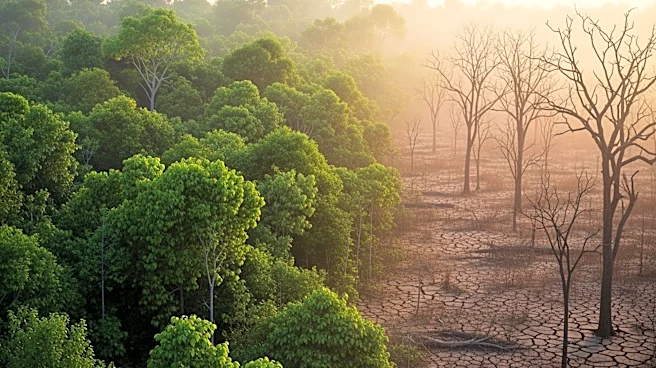
Recent research has revealed a significant shift in Africa's forests, which have transitioned from being carbon sinks to carbon sources. This change, identified by an international study led by scientists from the National Centre for Earth Observation,
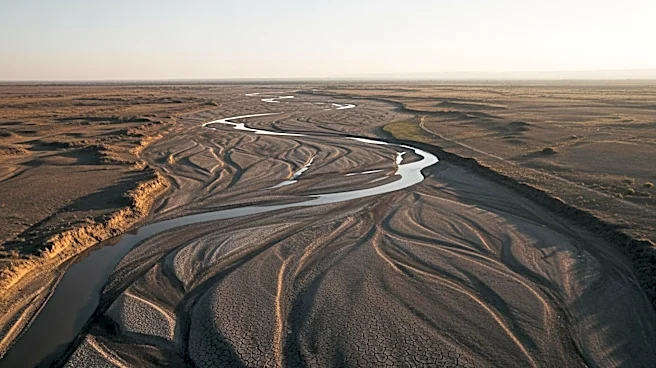
indicates that deforestation and degradation in tropical rainforests have led to a net loss of forest biomass since 2010. The study utilized satellite data and machine learning to analyze over a decade of forest data, showing that Africa lost approximately 106 billion kilograms of forest biomass annually from 2010 to 2017. The most significant losses occurred in tropical moist broadleaf forests, particularly in the Democratic Republic of Congo, Madagascar, and parts of West Africa. This development poses a challenge to global efforts to combat climate change, as forests play a crucial role in absorbing carbon dioxide.
Why It's Important?
The transformation of Africa's forests from carbon sinks to carbon sources has profound implications for global climate policy. Forests are vital in mitigating climate change by absorbing carbon dioxide, and their degradation could undermine efforts to limit global warming. The study's findings highlight the urgency of enhancing forest conservation and governance to prevent further losses. The shift also emphasizes the need for increased climate finance to support initiatives like the Tropical Forests Forever Facility, which aims to curb deforestation. Without immediate action, the world risks losing a critical natural system for carbon storage, complicating efforts to meet the Paris Agreement's climate goals.
What's Next?
To address the issue, stronger forest governance and enforcement against illegal logging are necessary. Large-scale restoration programs, such as AFR100, which aims to restore 100 million hectares of African landscapes by 2030, could help reverse the damage. The study underscores the importance of international collaboration to fund and support forest protection initiatives. As the global community seeks to enhance climate resilience, the findings serve as a wake-up call for more robust and coordinated efforts to preserve forests and achieve climate targets.