






What's Happening?
The Organization for Economic Cooperation and Development (OECD) has issued a warning regarding the potential severe impact on the global economy due to prolonged disruptions in energy supplies from the Middle East, specifically linked to the ongoing
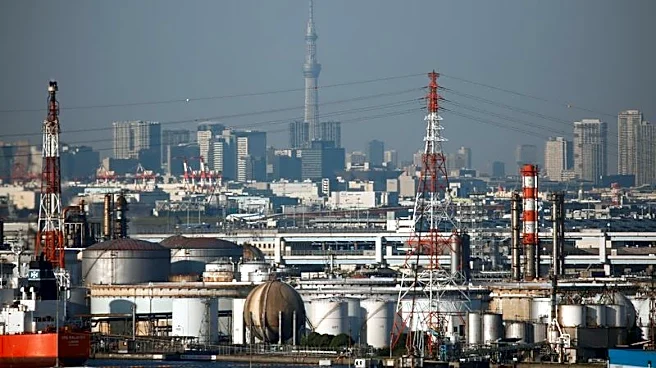
conflict involving Iran. The closure of the Strait of Hormuz, a critical passage for oil and gas shipments, has significantly reduced the flow of energy resources, affecting global markets. The OECD report outlines two scenarios: a prolonged disruption could lead to a global growth slowdown to 2.1% this year and 1.8% in 2027, potentially pushing some economies into recession. Alternatively, if the disruption is temporary and energy production resumes by mid-year, growth could slow to 2.8% this year but rebound to 3.1% next year. The report highlights the vulnerability of Asian economies reliant on Persian Gulf energy supplies and poorer countries where a significant portion of income is spent on fuel and food.
Why It's Important?
The OECD's warning underscores the interconnectedness of global economies and the critical role of energy supplies in maintaining economic stability. The potential slowdown in growth and increased inflation could have widespread implications, affecting employment rates and economic policies worldwide. Countries heavily dependent on Middle Eastern energy, particularly in Asia, may face severe economic challenges, while poorer nations could experience heightened poverty levels due to increased energy costs. The situation calls for international coordination and investment in diversifying energy sources to mitigate these risks. The report also emphasizes the need for targeted government spending to alleviate energy costs without exacerbating national debt.
What's Next?
The ongoing conflict and its impact on energy supplies will likely prompt discussions among international leaders and economic policymakers on strategies to stabilize the global economy. Efforts may focus on diplomatic resolutions to reopen the Strait of Hormuz and restore energy flows. Additionally, countries may accelerate investments in alternative energy sources to reduce dependency on Middle Eastern oil and gas. The OECD's call for temporary and targeted government spending could influence fiscal policies aimed at supporting vulnerable populations during this period of economic uncertainty.
Beyond the Headlines
The disruption in energy supplies due to geopolitical tensions highlights the fragility of global energy security and the need for sustainable solutions. Long-term shifts may include increased investment in renewable energy and technological innovations to enhance energy efficiency. The situation also raises ethical considerations regarding the equitable distribution of energy resources and the responsibility of wealthier nations to support poorer countries facing economic hardships. The conflict's impact on global trade and energy markets may lead to reevaluations of international economic alliances and strategies.