
What's Happening?
The United States is progressing to the next phase of its Gaza peace plan, which involves disarming Hamas, rebuilding the region, and establishing daily governance. This development follows the initial
ceasefire agreement reached late last year. Steve Witkoff, President Trump's envoy, announced that the plan's second phase includes demilitarizing Gaza and forming a new technocratic government. The U.S. has demanded that Hamas return the body of the final deceased hostage, Ran Gvili, an Israeli police unit member, warning of serious consequences if this obligation is not met. The ceasefire mediators, including Egypt, Turkey, and Qatar, have welcomed the establishment of a committee to oversee the transition, led by Ali Shaath, a former deputy minister in the Palestinian Authority. Hamas has expressed readiness to cooperate with the new administration and discuss the issue of resistance weapons.
Why It's Important?
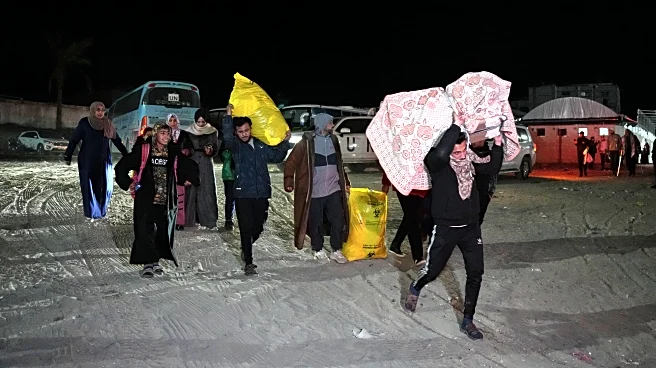
This phase of the Gaza peace plan is crucial for stabilizing the region and improving humanitarian conditions. The U.S. initiative aims to reduce tensions by disarming Hamas and establishing a governance structure that can facilitate reconstruction and economic development. The return of hostages and remains is a sensitive issue, impacting Israeli domestic politics and international relations. The successful implementation of this plan could lead to a more stable Middle East, potentially reducing the influence of extremist groups and fostering peace. However, the plan's success hinges on cooperation from Hamas and other regional stakeholders, making diplomatic engagement essential.
What's Next?
The next steps involve the formation and operation of the technocratic government in Gaza, which will require cooperation from various Palestinian factions. The U.S. and its allies will likely continue diplomatic efforts to ensure compliance with the ceasefire terms, including the return of hostages. Monitoring the situation will be crucial, as any failure to adhere to the agreement could lead to renewed conflict. The international community will be watching closely, as the outcome could influence broader Middle Eastern geopolitics and U.S. foreign policy.