
What's Happening?
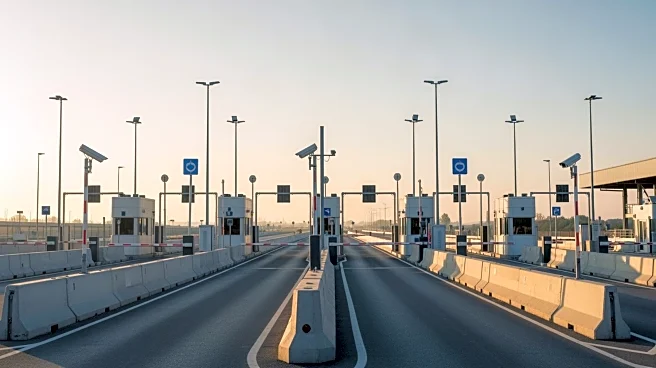
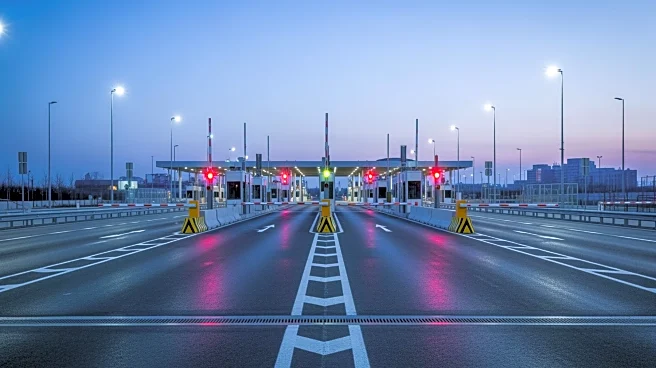
The Rafah crossing, Gaza's only external border not under Israeli control, has reopened under a limited pilot plan. Despite the reopening, movement remains heavily restricted. According to United Nations
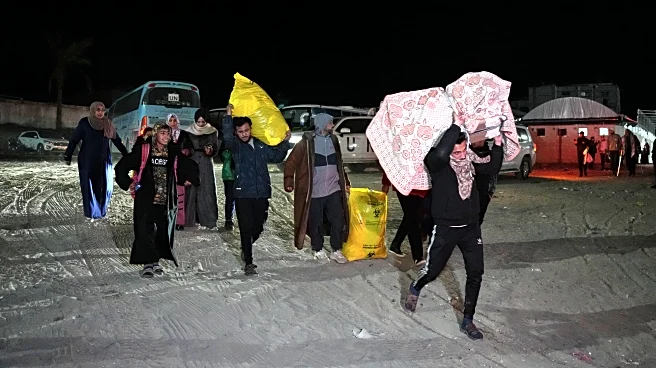
data, only 36 Palestinians requiring medical care, along with 62 companions, have been able to cross into Egypt over the first four days, which is significantly below the negotiated capacity. The arrangement, agreed upon by Israeli, Egyptian, Palestinian, and international officials, allows for 50 people to return to Gaza and 50 medical patients to leave each day, each patient permitted two companions. However, the actual numbers have been lower, with only 40 people crossing in each direction on the second day. The process involves rigorous screening, including hours-long questioning and luggage checks, which has delayed operations and left many stranded. The crossing's reopening is seen as a symbolic gesture, as no goods are allowed to transit, and the daily passenger caps mean that the majority of those in need remain unable to travel.
Why It's Important?
The reopening of the Rafah crossing is significant as it represents a potential lifeline for many Palestinians in Gaza who require medical treatment unavailable locally. However, the limited capacity and stringent controls highlight the ongoing humanitarian challenges faced by the region. The crossing's operation is a test of whether it can be managed predictably and humanely, which is crucial for the thousands of Palestinians seeking medical care and connection to the outside world. The situation underscores the broader geopolitical tensions and the complex dynamics between Israel, Egypt, and the Palestinian territories. The limited reopening may offer some hope, but it also emphasizes the need for a more sustainable and humane solution to the movement restrictions affecting Gaza's population.
What's Next?
The pilot operation of the Rafah crossing will continue to be monitored closely by international and regional stakeholders. The success of this limited reopening could influence future negotiations and arrangements for more permanent and expanded access. However, the current restrictions and operational challenges suggest that significant improvements are needed to meet the humanitarian needs of Gaza's population. Stakeholders may need to address the bureaucratic and logistical hurdles that currently impede the crossing's effectiveness. The outcome of this pilot could also impact broader discussions on the political and humanitarian situation in Gaza, potentially prompting further international involvement or intervention.